
One Employee Will Kill Your Business, and You Won’t Even Know It When it Happens.

The reputation of a thousand years may be determined by the conduct of one hour. Japanese proverb.

According to a study conducted by the Rockefeller Corporation of Pittsburgh, 68% of customers stop doing business with a company because of an attitude of indifference by an owner, manager, or some employee. Now do you really think that an owner or manager would not care about their customers? You can almost take for granted that they “get it.” So who is left? And the statistic does not say “some employees.” It’s just one. To the customer, just one employee IS the company. And that one employee could cost your business big.

Just before Christmas 2011, a security video of a FedEx driver nonchalantly dropping a computer monitor over a fence went viral on YouTube with over 2 million views in 48 hours. Today it has over 9.4 million views.
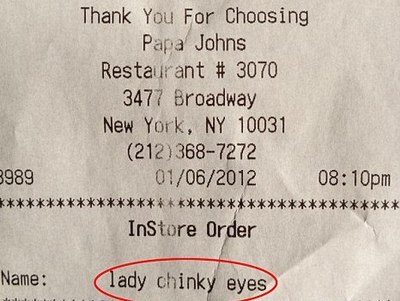
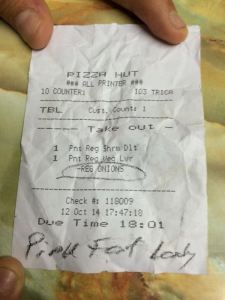
In 2012, a picture of Pink Fat Ladya Papa John’s receipt with its racial slur was retweeted 25,000 times in two hours. And in October, 2014 a similar incident happened at a Pizza Hut. These incidents generated huge press coverage for the wrong reasons for their brands and prompted apologies from the C-level of both companies.
Leadership development speaker Mark Sanborn posted in his blog about being told that to catch an earlier flight but with a downgrade from first class to coach, it still would cost him an additional $75. It didn’t matter that he was a United 1K Elite traveler flying over 2 million miles with United.

People Skills Coach Kate Nasser posted in her Smart SensAbilities blog about her confrontation with Karen, the manager at the Hilton Garden Inn in Eagan. When Ms. Nasser went down to catch the cab that would take her to her appointment, the cab driver asked for her room number. Of course, she didn’t want to give it to a complete stranger. So she asked the cab driver to come back into the hotel so that they could confirm her cab reservation. Ms. Nasser explains to Karen at the front desk that she did not want to give out her room number and could Karen confirm to the cab driver that she was the client for the reserved cab. Here’s the rest of that conversation:

Karen to the cab driver: “Her room number is 210.”
Ms. Nasser: “Excuse me, you just gave my room number to this man.”
Karen:  “The cab company requires it.”
Ms. Nasser, “You just gave this man my room number.”
Karen: “Nothing has ever happened.”
Ms. Nasser: “You just gave out my room number. How are you going to fix this?”
Karen: “Are you going to argue with me or are you going to get in the cab?”

Nick Meiers posted on his Essential Hospitality blog about this conversation he overheard in a restaurant:
Guest:  “How is the rib-eye?”
Server: “I’m not sure, I’ve never eaten here. You know how it is, you don’t want to be at work when you’re not working!”

I am convinced that in each of these incidents, these employees didn’t see anything wrong to act indifferently to the customer as they did. And here is the “killer” part.  In each of these cases, their manager or owner had no clue that these employees did what they did. Of course, the owner or manager would have handled each situation differently. But they weren’t there. At that moment, the reputation of the brand was in the hands of the one employee who was. And in each case, with the amplification by social media, the brand lost big time.

So what can you do to make sure you don’t have even one of these business-killing employees?

QUI ACTION STEPS:

  • Define customer service expectations during the onboarding process. Include customer service standards in each job description. Create and review your customer service manifesto with each new hire.
  • Use these poor customer service examples and those you read or hear about to remind your team of how the actions of just one employee can damage the business and brand. Discuss proper responses in handling similar situations that could arise in your business.
  • Take immediate disciplinary action when an employee displays rude behavior to a customer.
  • Share customer feedback, good and bad, regularly with your team. Involve your employees in defining alternative responses in handling the situations that generated negative customer comments.
  • Motivate your team continuously with daily huddles to keep focused on delivering exceptional customer service.
  • Constantly ask your employees if there are any incidents or questions that need to be resolved today so they can be better equipped to handle them in the future.
  • Empower your employees to bend the rules to take care of your customers.
  • Reward, recognize. and celebrate the random acts of kindness that individual employees offer your customers.
  • Serve as a role model to your employees when interacting with your customers directly.

When you do this you will keep every one of your employees involved, engaged and committed in only offering the kind of “killer” service for which you DO want to be recognized.

8 Comments

Filed under Customer Service

Do you have a Customer Service Manifesto?

Imagine if you could get each person on your team focused on the same vision and commitment to the delivery of the World’s Best experience for each customer. Your company’s service reputation would be broadcast so loudly by all of your customer loyalists that you easily would dominate your competition. So how do you do it? How do you get everyone on your team reading from the same book? Simple. Put it in writing. Literally let them read from the same book.

Create your customer service manifesto. Your manifesto is a declaration of your company’s customer service creed, principles and intentions. Do not confuse this booklet with the employee handbook. The latter defines the legal responsibilities of the company and the employee.  Your manifesto defines your company’s service culture. The employee handbook defines the limitations of personal performance. Your customer service manifesto defines the principles that each team member should aspire to perform. Big difference.

Why is writing your customer service manifesto so important? Review your company’s first day orientation agenda for a new employee. I am sure you will find that, while benefits are reviewed, much more time is spent on company policy – email and social media guidelines, conduct on and off duty, house rules, safety, sexual harassment, and on and on. It’s like saying to a new employee, “Welcome to the company. Now here is how you can get fired.” On the first day, you spend more time explaining the obstacles more than you do how to go above and beyond to wow your customer. What’s wrong with that picture?

Your manifesto will let your employees know that you are committed to service that is not hindered by rules. Discussed separately from the rules and regulations, you initiate new employees to fully grasp the value and importance of customer service. The principles within the manifesto define the level of service to which you wish each employee to aspire. So what are the components for a customer service manifesto? Here you go:

Mission Statement – Your mission statement should answer three simple questions: What do you do? How do you do it? Who is your customer?  Keep it short. Your mission statement should be memorable and easily recitable. Disney offers one of the best examples of a mission statement:  (What do you do?) We create happiness (How do you do it?) by offering the finest in entertainment  (Who is your customer?) for people of all ages, everywhere. It is simple, yet aspirational. What is your mission? Is it memorable? Can your employees get passionate about it?

Your Company Heritage – Most businesses give a new employee a historical timeline of major events. But a heritage is something more. A heritage incorporates the “why” behind the “who, what and when”.  A heritage is the storytelling of the rich tradition of your company. Marriott employees all know the story of newly wed J.W. and Alice Marriott’s trek from Salt Lake City to Washington, D.C., the nine stool Hot Shoppe where J.W sold 5 cent A&W root beer, and the sticky nickels hand carried to the bank by Alice Marriott. What is your company’s story?

Core Values – The core values for Baptist Health Care are Integrity, Vision, Innovation, Superior Service, Stewardship and Teamwork. Yum! Brands employees focus on CHAMPS: Cleanliness, Hospitality, Accuracy, Maintenance, Product Quality, Speed of Service. What are the pillars on which your company is built?

Appearance Standards – To the customer, the employee is the company and first impressions do matter. Your message here should convey that an employee’s appearance should be a reflection of your company’s professionalism and not an employee’s personal style.

Performance Tips – Define the specific behaviors that can guide employees to act courteously with customers in person, on the phone and on-line. Include in this section the forbidden phrases like “Honey, Sweetheart.” “I don’t know.” “You should have . . .” and “To be honest with you . . .” while offering performance expectations such as answering any ringing phone within three rings or an email within 8 hours, as well as using the person’s name at every opportunity. You know how to properly interact with customers. How do you want your employees to act? Tell them by writing it down.

Service Recovery – Marriott Hotels uses the service recovery acronym LEARN: Listen, Empathize, Apologize, Respond, Notify (your supervisor and co-workers so that it does not happen again to future customers). Other businesses use the acronym LAST: Listen. Apologize. Solve. Thank (the customer for bringing the issue to your attention). What are the service recovery steps that you expect every employee to take when confronted with a dissatisfied customer?

Experience Flow Chart – Jan Carlzon, then CEO of SAS Airlines, defined a Moment of Truth as “anytime a customer comes into contact with any aspect of a business, however remote . . . to form an impression.” Whether you call it an experience flow chart or experience journey map, plot all the emotional touchpoints of the customer’s experience. The employee can then be more aware of the key opportunities to wow your customers.

Aspiration page – This last page could be customer testimonials, motivational or customer service quotes or a parable like The Starfish Finder. (Google “Starfish Finder” if you haven’t heard of this story). This last page should serve as aspiration that one person truly can make a difference in the experience of a customer.

But merely writing and distributing the customer service manifesto at orientation is not enough. Spend time with the new employee to give your personal interpretation of the meaning and importance of the key components.

QUI TAKEAWAY: Samuel Johnson said, “People need to be reminded more often than they need to be instructed.” Ritz-Carlton established itself as one of the finest luxury hotel brands by mandating a daily line-up where that day’s Ritz Carton Credo card’s performance tip is reviewed. So refer to your manifesto often and ideally discuss daily one item within it  to instill in each employee your company’s mission, values, and performance expectations. And when you do, you will see that each employee will deliver consistently the World’s Best Experience to every one of your customers.

11 Comments

Filed under Customer Service, Training

Leadership Mantra for New Managers: Connect. Inspire. Empower.

Leader and teamwork“How long employees stay at a company, and how productive they are there, is determined by the relationship they have with their immediate supervisor.” Jim Kouzes and Barry Posner, The Leadership Challenge

When I served as a hotel GM, I had the opportunity to promote many front-line employees to their first management position. My commitment to them did not end at giving them a new title. That’s the easy part. More importantly, I needed to make sure they succeeded in their first leadership role. According to Kouzes and Posner, these managers supervising the staff who were directly interacting with our guests had as much, if not more, impact than I did on employee engagement and subsequent customer satisfaction. And while each new manager displayed strong interpersonal skills that served them well to earn the promotion, managing people requires a different set of skills. We all know of an all-star employee who failed as a manager. So my advice to any first-time manager is to live this leadership mantra: Connect. Inspire. Empower.

Connect.

“People do not care how much you know until they know how much you care.” John C. Maxwell

Before making any major changes as a new manager, take the time to get to know your direct reports. Find out their personal and career aspirations. Then work hard to help them achieve their goals.  Talk to each member every day. Visit the break area regularly just to chat. Get to know what they like to do outside of work. Given the opportunity, meet their significant others and family. Celebrate your employees’ birthdays and anniversaries. They know when they are scheduled on their birthdays and the date they started working at your business. You should, too. Remember that without involvement there is no commitment. If you are not involved with them, then they simply won’t be committed to you.

Inspire.

“Yesterday’s idea of the boss, who became the boss because he or she knew more than the person working for them, is yesterday’s manager. Tomorrow’s person leads through a vision, a shared set of values, a shared objective.” Jack Welch

If you want to build a ship, don’t drum up people together to collect wood and don’t assign them tasks and work, but rather give them to long for the endless immensity of the sea.”  Antoine de Saint-Exupery

“Communicate everything you can to your associates. The more they know, the more they care. Once they care, there is no stopping them.”  Sam Walton

Your business has a mission statement. As a leader, you should have a passion statement. The best managers are passionate about what they do. Frankly, if you are not passionate about what you do, you have no right to manage others. That said, be sure to express your passion to your people. What do you envision for the business? The owner or senior manager has a vision for the business. What is yours? Let your people know. Once they see and share your “big picture”, then every step your people take will be in that direction.

Keep your passion statement short. Say it often. Make it stick. Your message cannot be mentioned only at new hire orientation. You must continually and consistently express your vision.

Empower

“The best executive is the one who has sense enough to pick good men to do what he wants done, and self-restraint enough to keep from meddling with them while they do it.”  Theodore Roosevelt

Create a work environment where everyone has the necessary tools and are encouraged to take care of the customer. Ritz-Carlton permits every employee to spend up to $2000 making any single guest satisfied. It is no wonder that the brand is perceived by its guests as simply one of the best. For your team to embrace the idea that you are empowering them to do whatever it takes to satisfy the customer, you must establish and explain any guidelines. It could be as simple as the Nordstrom Rules:

Rule #1: Use best judgment in all situations. There will be no additional rules.

Most likely your guidelines will be a little more conditional, but whatever you decide, make sure you define and cite examples for your team. And continue to monitor, recognize and reward those employees who do take action.

QUI TAKEAWAY: Connect with your people. Inspire them. Then empower them.  This is not a one-time thing. It is an everyday thing. And when you live this mantra, you will be an involved leader with an engaged team, all intent on delivering the very best experience for your customer.

2 Comments

Filed under Leadership, Training

February 14: Customer “Show Your Love” Day

In our personal relationships, while we love those close to us as much everyday, Valentine’s Day gives us an opportunity to express it in a special way. And if you don’t think that it’s important to proclaim “I love you” to your significant other on Valentine’s Day, just try missing one. It should be no different for your customer relationships. People like to buy from people who want their business. And while you don’t take any customer for granted, Valentine’s Day is a great occasion to express your appreciation to your loyal customers. Make this day “Show Your Love” Day for your customers. What could you do on Valentine’s Day to offer a special “thank you” for their continued patronage and support of your business?

With that in mind, here is my Top Ten list of Valentine’s Day inspired quotes that can serve you well as reminders on how to “show your love” to your customers.

Love is doing what is best for a person regardless of the cost or response. R. Robert Flatt

The first duty of love is to listen.  Paul Tillich

Love has nothing to do with what you are expecting to get, it’s what you are expected to give — which is everything.  Anonymous

Love is the condition in which the happiness of another person is essential to your own. Robert Heinlein

Get not your friends by bare compliments, but by giving them sensible tokens of your love. Socrates

We too often love things and use people, when we should be using things and loving people. Anonymous

Anyone can catch your eye, but it takes someone special to catch your heart.  Anonymous

Love is like a tennis match; you’ll never win consistently until you learn to serve well. Dan P. Herod

Every time you smile at someone, it is an action of love, a gift to that person, a beautiful thing. Mother Teresa

That best little portion of a good man’s life – his little nameless unremembered acts of kindness and love.  William Wordsworth

Whether you are following me on Twitter, Facebook, Google+ or via this blog, I see you as my customers. So on this day, as sincerely as these written words can express, I really do appreciate your continued support. Thank you very much and Happy “Show Your Love” Day.

Now what can you do today to “show your love” to those who surround you in your business and those loyal customers who made you successful?

2 Comments

Filed under Customer Loyalty

Just because you don’t think it’s a big deal, it’s a BIG DEAL!

“Just because you don’t think it’s a big deal doesn’t mean your customer doesn’t think it’s a big deal. When your customer says it’s a big deal, it’s a big deal. And even when your customer says “It’s no big deal,” it’s still a big deal. Or why would they bring it up?” – Kristin Anderson, Performance Research Associates

Customers are paying for their experience, not your service. And customers buy with emotion and justify that decision with reason.

Several weeks ago, I was shopping in the local vitamin shop when I overheard a customer tell the cashier, “I think someone just left their credit card.” The cashier says, “It might be that woman’s,” and points to the lady outside just about to get into her car. It was very obvious the cashier wasn’t going to do anything else so the customer took the card and practically ran out to ask. It wasn’t hers. The customer brought it back, left it on the counter, and went about shopping in the store. The card was still on the counter when he went back with his purchase. The customer picked it up and placed it behind the counter. The cashier just left it there. He didn’t stick in the register. He didn’t give it to the manager. Nothing. That cashier didn’t get it. To that cashier, it was simply a piece of plastic. To him, no big deal. To us, as customers, credit cards are unbelievably valuable. If we ever misplace a credit card, let alone lose one, we panic. To us, it’s a BIG DEAL!

Last Saturday, while I was at home, my wife lost her keys at the local Walmart. Her keys were her car keys, the condo apartment keys, and the remote of the complex security gate. Fortunately, she had taken my car keys, but she had panicked and asked if anyone had found her keys. The Walmart service people had not and after searching for them throughout the store, told her they could call her back if they found her keys. Even though she was safely back home, she was distraught. After an hour she called, but they had not yet found them. Minutes later, we received a call to tell her that she could pick up her keys. We quickly came back and when we arrived, the supervisor exclaimed, “We found it!” and the security guard gave the keys to us. My wife was ecstatic, thanking them many times over.

As a customer, you know that we don’t buy from companies; we still buy from people. And we buy from people we know, like and trust. In just reading about what happened in the vitamin shop, you see as I see, as a customer, that the cashier is the store. And that one act that he does not think was at all important to him is the snapshot we take of that business. To the customer who found it, to the customer who hopefully will claim her card, and to me, we are all questioning the trust we can have for that store. And that mental snapshot stays with us until another snapshot of that business replaces it. In fact, for some customers, it may take a motion picture of positive impressions before that one snapshot is deleted. It takes 12 positive service incidents to make up for one negative incident. And some customers who have a bad experience may never give a business a second chance, opting simply to walk away, intent on never coming back.

To many customers, shopping at Walmart is satisfactory. Satisfied customers feel service is good, not better, just average. Nobody raves about average. And satisfied customers will leave when they find something better or less expensive. Walmart may lose many keys in a week, so much so, that service people may think keys are no big deal. But, like customers who lose their keys, my wife feels that those keys were a BIG DEAL to her. Customers have an emotional connection with you. The more emotional the connections, the more memorable the experiences, the more loyal the customers. And loyal customers will return again and again, raving about you to others along the way. 

QUI TAKEAWAY: Put on your customer experience hat. When you serve customers remember, “To the customer, you are not the representative of the company. You ARE the company”. If you are a customer service manager, reinforce to your team that each interaction with a single customer represents all of you as a business. Every act of any one individual is a customer’s snapshot of your company’s likability and trust. And every act, no matter how small, is a BIG DEAL. Customers don’t know how big you are. They only know how big you care about them.

5 Comments

Filed under Customer Loyalty, Customer Satisfaction, Training

Never go to a doctor whose office plants have died.

“Never go to a doctor whose office plants have died.” Erma Bombeck

What do dead plants in the waiting room have to do with the skill of the doctor? Logically nothing, but to the customer, everything.

When we are sick, we go to the doctor because we do not know what is making us sick. The doctor is the expert. Even if he misdiagnoses the illness and prescribes the wrong medicine, we would still take his word for it since we have no experience in medical diagnosis. We assume that the doctor is the trusted authority. In fact, we assume it so much that we don’t ask the doctor to prove it. No one has ever walked into a doctor’s office to ask “Before you examine me, from what medical school did you graduate?” We take his expertise for granted because we have no benchmark.

But we can judge a doctor on what we do know. We know what clean and orderly looks like. We know what friendly looks and sounds like. We know what waiting too long feels like. And we certainly know what dead looks like. And with past experiences, we can judge how our doctor visit stacks up to those experiences. And based on the entire experience we will decide whether to come back or not, and depending on the experience, will either refer our friends or tell the world to stay away with an online bad review. Is that logical? Of course not, but as management consultant Tom Peters says,

“Customers perceive service in their own unique, idiosyncratic, emotional, irrational, end-of-the-day, and totally human terms. Perception is all there is!”

When there are dead plants in the waiting room, the customer is saying to himself, “If they can’t even take care of the plants, why do I want them taking care of me?”

While a general manager at a resort up north in Michigan, I served as an adjunct instructor for many years teaching customer service at the local community college. To their credit (pardon the pun), the college made my customer service class a prerequisite for the office administration and medical administration paths. They understood that it is not what you know; it is how you say it. At the end of the semester, a survey was given to the students on how I did. Was I on time for class? Did I cover the objectives defined in the syllabus? Was I available after hours? All the survey questions were focused on the instructor. As part of the class session discussing customer feedback, I surveyed the students on their school experience. My question was, “If there was anything you could improve in your education experience, what would that be? Very few answers were specific to what the administration thought was the college experience. Rather the improvements ranged from the parking lot to the restrooms. What does the parking lot have to do with higher education? Logically, nothing. But to the female student who is taking night classes, everything. She perceives a burned-out light in the lamp post as an unsafe parking lot. What does the restroom have to do with the education offered? Nothing. But as a female student wrote in her survey, “During the winter, the restrooms are so cold, I can’t even think after going in there.”

Several weeks ago, I needed to see a dentist. When I asked a friend for a referral, she gave me the name of her dentist. I asked why she thought the dentist was so good. She said the waiting room had Wi-Fi, they offered free bottled water and juice and there was a large flat-screen TV in the waiting room. And, as an afterthought, she said the dentist was nice, too. The most important aspects of her dental experience were the touchpoints that eliminated the waiting time and angst of the perception of visiting the dentist for the first time.

QUI TAKEAWAY: Don’t be too focused on just your expertise. Your customers have no way to judge you on what you know. But they can grade you on the other touchpoints that they have experienced before. Take the time to look at your entire customer experience. Identify all the potential dissatisfiers and remove them. Then replace them with something positive.

What potential “dead plant” dissatisfiers in your customer experience are you leaving unattended?

3 Comments

Filed under Customer Experience, Customer Service

Silent gratitude isn’t very much use to anyone.

“Silent gratitude isn’t very much use to anyone.”  – G.B.Stern


Since this is the week we celebrate Thanksgiving in the United States, I want to take this opportunity to wish those who celebrate this holiday a very Happy Thanksgiving.

I also want to express my thanks to all of you everywhere for following me on Twitter, Facebook, LinkedIn, Google+ or right here on WordPress. I certainly have enjoyed and appreciated connecting with hundreds of people throughout the world via these social media platforms, something that wasn’t even possible just a few years ago.  And while I enjoy blogging about my passion for great customer service, I certainly have enjoyed as much the dialog I have had with many of you. So thank you to all.

While the above quote about giving thanks is one of my favorites, here are several more about gratitude that I hope you enjoy as much as I do. And for leaders, while all of these quotes are common sense advice to build employee engagement and customer loyalty, we have to commit to making this common sense advice truly common practice in our day-to-day efforts.

Thanksgiving Day comes, by statute, once a year; To the honest man it comes as frequently as the heart of gratitude will allow.  – E. S. Martin 

As we express our gratitude, we must never forget that the highest appreciation is not to utter words, but to live by them. – John F. Kennedy

God gave you a gift of 86,400 seconds today.  Have you used one to say “thank you?”  – William Arthur Ward

Appreciation is like an insurance policy. It has to be renewed every now and then. – Dave McIntyre

Kind words can be short and easy to speak but their echoes are truly endless. – Mother Teresa

3 Comments

Filed under Customer Experience, Leadership

The M&M of Employee Engagement

colorful candy background closeup detail
Management is no longer merely a task-oriented discipline. To be a successful manager, not only do you need to effectively direct your employees, you need to have them understand their role in the bigger picture of the company’s image to your customers. Your customers are not a captive audience. They do not need to do business with you. You have to create a reason why they want to do business with only you. The only tangible difference between you and your competitor is not your product or service you sell, but rather the service that your employees provide your customers during their interaction. The success of your business rests on your staff’s ability to encourage return business as a result of superior customer service.

Ultimately customer satisfaction begins with employee satisfaction. Yet, too often, management overlooks the day-to-day contributions employees make to the business. Some business leaders will claim, “We have the best wages and benefits among our competitors. Isn’t that good enough? And I’d say, “If the only thing your people get out of their job is a paycheck, you, as a leader, have failed.” One of the top reasons why employees leave a company is not because of the rate of pay or benefits. It is because they felt they did not get recognized for their efforts. At the same time, your employees will only deliver the level of service that they have experienced within your business. With that in mind, you must ensure that your employees understand their key role in the success of your business and are recognized for their efforts. In order to accomplish this, incorporate in your management style these two M’s – Motivation and Maintenance.

Motivation

Motivation begins with the selection (You don’t hire. You select) process and continues through onboarding. During the interview, you should explain to the prospective employee the critical “key role” in maintaining the highest level of customer courtesy. Thereafter, ensure that each new employee goes through an extensive orientation program that not only includes the tasks of their job, but also the vision and specific proven performance tips to deliver your expectation of customer service.

This orientation sets the tone of your company’s commitment to the customer and reinforces the “key role” concept you discussed in the selection interview. Continue on-the-job instruction with a designated coach. The key criterion for the selection of your coach should be an outgoing, friendly character which captures what you want to project as your company’s personality. Be sure that the coach is aware of your expectations of the delivery of the customer service performance standards.

Keep your employees informed. The #1 complaint employees have of their company is the lack of communication. They want to feel that they are “in the know”. Conduct regular meetings to inform the staff of the status of the business and its forecasted future. Be honest with them. To create a customer focused culture, distribute and post thank you letters or testimonials received from customers. Consider maintaining a Facebook page specifically for your employees that would periodically remind them of their focus on customer service. That page can serve as an advertisement of the company culture for prospective employees. Your employees will be more concerned about their job performance if they are more aware of their business.

Acknowledge your employees as members of your professional family. Recognize special dates or occasions such as birthdays, anniversaries, family births, or illnesses. Birthdays are very important as your employees know that they are working on their birthday and expect their manager to know, as well. Announce these so everyone knows and send the appropriate cards or flowers. Organize pot luck luncheons or picnics, holiday dinners, or even baby showers. Remember that if you show special consideration for your employees, they, in turn, will take better care of your customers and your business.

Create recognition programs. Special appreciation such as Random Acts of Kindness Awards, given to employees who are named by your customers as offering stellar service instill in the recipients a sense of pride that their contributions have been recognized by you. A commendation letter delivered via mail to an employee’s home or a gift card for dinner with their family serve to have the employee’s family understand and appreciate the employee’s commitment to your business.

Utilize inexpensive motivational tools. Hang a mirror in the office with a sign above it that says; “Smile, You Are (Your Company’s Name.) This conveys that each employee’s appearance is a reflection of your business. Stamp paychecks with morale boosters. Put up posters that depict themes of success and teamwork. Successories and Baudville are two companies that offer such products to deliver great motivational messages.

Maintenance.

Maintenance, in this sense, is synonymous with consistency. The continuation of any of the programs you start is essential. Do not begin a special program only to drop it soon after your employees come to appreciate it and look forward to it. If you begin a newsletter bulletin board, posting the names of new employees, employee birthdays and anniversaries, promotions, customer appreciation letters, and in-house activities then you must maintain it monthly with current topics.

Visible management is essential. Practice the “Inspect What You Expect” and CBWA  or “Caring by Walking About” credos. Follow up on your training programs. Remind your employees with any updated techniques, as well as a refresher course on customer service. Conduct employee surveys or better yet, hold regular group discussions with a small number of your staff, to get maximum input and participation from each employee. Be visible and be available to your employees.

QUI TAKEAWAY: Ultimately, your employees drive customer satisfaction. Do not take for granted the immense impact a concerned, vital group of employees can do to enhance the image and success of your business. Whether it is through recognition programs or your visible management, your employees must sense and believe in your conviction that they are your competitive edge – the reason why customers will return to your business.

2 Comments

Filed under Leadership, Training

GREAT Service is GREAT Theater. Don’t be just good. Be GREAT out there out there!

In their book, The Experience Economy, Joseph Pine and James Gilmore define that “Work is theater and every business a stage.” If you were an actor delivering a great live theatrical performance, the audience becomes wrapped up in the experience and as they walk out of the theater, they are telling their friends that it was the best thing that they’ve enjoyed in a long time.

It does not matter to the audience that the actors are performing for the 100th time. The audience has paid very good money to see the show and expects the actors to deliver their performance with the same passion as on opening night. Your customers expect nothing less. As it is in Great Theater, you have to “act it like you mean it”. Do not confuse this with “fake it till you make it”. Your customers, like any audience, can see right through that kind of performance. Do you always feel like working every day, five days a week, 8-10 hours a day, on your birthday,  holidays, or even on scheduled days off? Of course not. But do you think the customer really cares how you feel? Absolutely not! No customer walks into your establishment and says, “Dissatisfy me now”. So you have to deliver Great Theater every day whether you feel like it or not.

When you perfect the delivery of the script, you perfect your performance. Break down your customer experience, act it like you mean it, and deliver Great Theater. For example:

ACT ONE. Scene One.

 The Customer enters from offstage.

SERVICE PROVIDER: “Good afternoon, how may I help you?”

Motivation: Never say “May I help you?” If the customer is standing in front of you, he obviously needs help or he would have bypassed you completely.

CUSTOMER: “I believe I have a reservation. Last name is Smith.”

SERVICE PROVIDER: “Yes, Mr. Smith, we’ve been expecting you. Welcome to The Best.”

Direction: Maintain eye contact for at least seven seconds and smile as you say your lines.

Motivation:

  • As Dale Carnegie says in his book, How to Win Friends and Influence People, “Remember that a person’s name is to that person the sweetest and most important sound in any language.” So start with the customer’s name.
  • What do you think is the very first question running through the mind of a customer when coming up to an airline counter, front desk, host stand, or reception desk? That question is, “I wonder if they have my reservation?” So to establish a great first impression, incorporate this statement into your welcome, “We’ve been expecting you.” It immediately removes that mental dissatisfier and puts the customer at ease.
  • Follow that up with the name of your business.

Let it all flow together.

“Mr. Smith” (you’re very important to us). “We’ve been expecting you.” (No need to worry about your reservation. We have it.) “Welcome to . . .” (Where did Mr. Smith feel the most comfortable in interacting with a company? With you, of course. )

QUI TAKEAWAY: Define each scene in the customer experience and practice it often offstage. Never practice on the customer. Role play with your colleagues. Then perform your role so well that all your customers say to themselves and others that your service was the best that they have enjoyed in a long time. And when you deliver that kind of Great Theater performance consistently, you will build repeat business and customer loyalty.   

QUI QUOTE: GREAT Service is GREAT Theater. Don’t fake it till you make it. Act it like you mean it. Don’t be just good. Be GREAT out there!  

#customerservice #customerexperience #custserv #custexp #cx


1 Comment

Filed under Customer Experience, Customer Loyalty, Customer Satisfaction, Customer Service, Hospitality

No Surprises. No Excuses.

Displeased young girl has a serious conversation with the hairdresser

“Customers perceive service in their own unique, idiosyncratic, emotional, irrational, end-of-the-day, and totally human terms. Perception is all there is!”

Tom Peters

When your customers call or walk into your establishment, they already have a perceived expectation of what your customer experience should be. Your advertising, website and salespeople, which serve a promise to your customers, have already shaped that expectation. Deliver on that promise and your customers come to trust you. Fall short and you have broken that promise and trust. For example, a restaurant menu is a promise to your customers that what is printed on the menu is what you have to offer. If you have to tell a customer that he has an old menu, the new menus haven’t been delivered by the printer and the dry-aged steak is not on the new menu, then to the customer, you failed. He doesn’t care about the printer. All he cares about is his steak. And you failed to deliver it. And his perception is all there is.

Customers don’t care that it’s your first day on the job. They don’t care that you are understaffed because someone called in sick. Customers don’t care that the computers were down when they called.  They only care that they are your customers.  They are willing to give you their hard-earned money in exchange for an experience that they feel is more valuable to them than their money.  And when they come to you, they never have an expectation that they will be dissatisfied.

So how do you live up to your customers’ expectations? At the very least the customer experience you deliver should be with no surprises and no excuses. To your customers, any experience less than their expectation is perceived as a dissatisfying surprise. And any reason you offer to explain why you could not deliver is perceived as an excuse. And their perception is all there is.

So do everything you can to make sure there are no negative surprises. Get rid of any potential dissatisfiers.  For example, remove forbidden phrases such as “I’ll be back in a second,” Can you hold for just a minute?” and “I’ll be right with you.” Such phrases only frustrate a customer when more than 60 seconds go by.  Review all the customer touchpoints and take any negative issue and make it a neutral.  Minimize wait times. Clean dirty restrooms. Create “no hassle” return or exchange policies.  Then, as Larry Winget, the Pitbull of Personal Development puts it, “Do what you said you would do, when you said you would do it, the way you said you would do it.”  That’s it. It’s that simple.  Just “do what you said you would do, when you said you would do it, the way you said you would do it.”

And if the customer is unpleasantly surprised because you could not deliver, then offer no excuses. Simply apologize. Even if the customer asks for a reason, just say, “It doesn’t matter. We failed. It should never have happened and I apologize.” Remove the surprise and offer some form of atonement.

QUI TAKEAWAY: To drive customer loyalty, deliver to each customer an experience that has “No Surprises. No Excuses.”

3 Comments

Filed under Customer Experience, Customer Loyalty, Customer Satisfaction, Customer Service