Earning customer loyalty is ultimately about creating and maintaining relationships. Over 70 years ago Dale Carnegie wrote the very best book on building relationships, “How to Win Friends and Influence Others.” While the stories are too dated to be relevant for most people, the fundamentals defined by Dale Carnegie many years ago are still customer service gold today. Mr. Carnegie defined the six ways to make people like you:
Become genuinely interested in other people.
Smile.
Remember that a person’s name is to that person the sweetest and most important sound in any language.
Be a good listener. Encourage others to talk about themselves.
Talk in terms of the other person’s interests.
Make the other person feel important and do it sincerely.
Over seventy years ago, Mr. Carnegie recommended making the other person feel important by using that person’s name. Common sense. But is it common practice? You decide. Let’s use your credit card as an example.
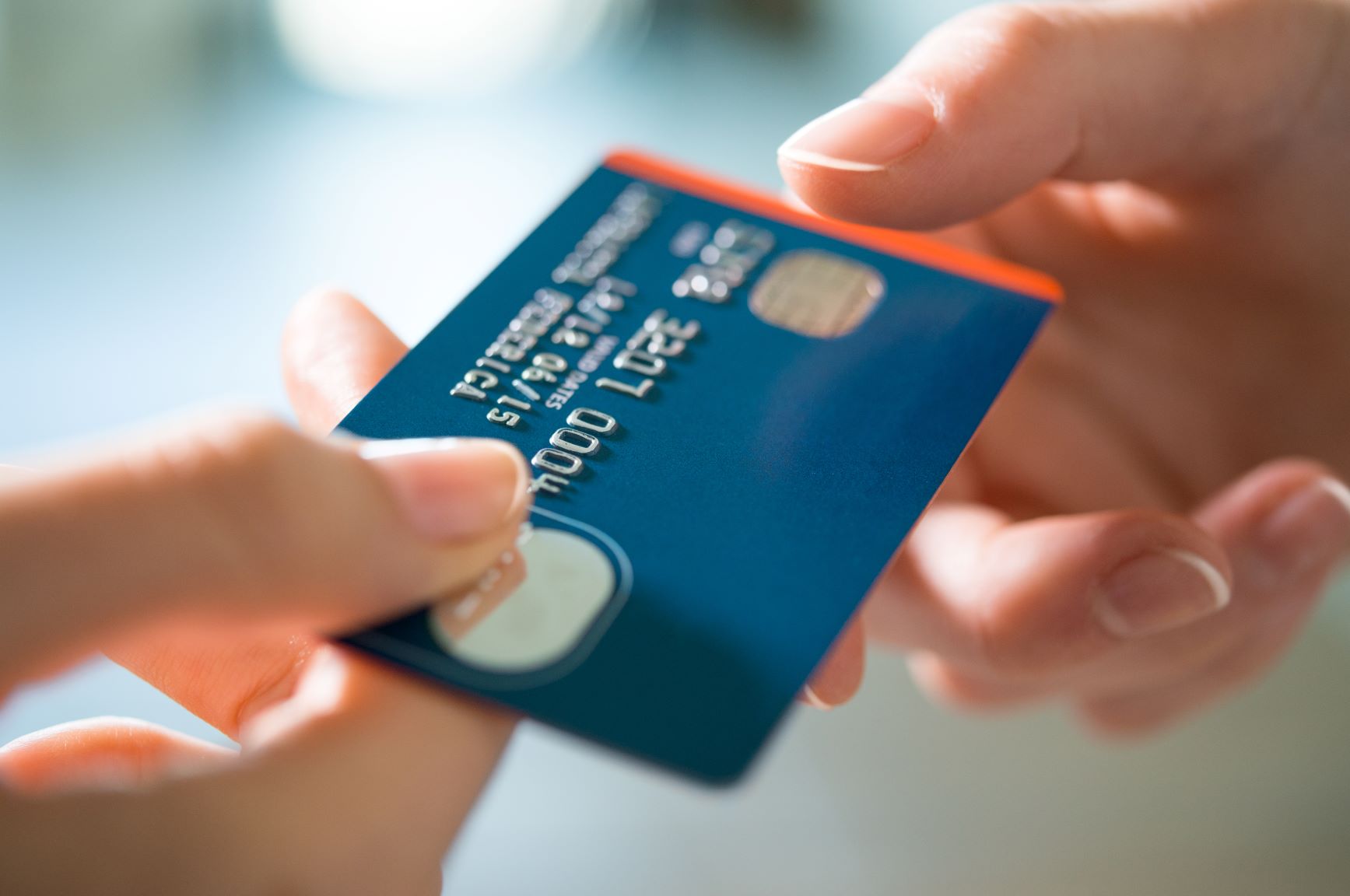
Be the Customer. A credit card is only a piece of plastic but it is very personal and valuable to you. Should you ever lose it, you would be panicking about identity theft or credit card fraud. When you make an in-person retail purchase, you hand a credit card with your name printed right on it to the cashier. In handing it back to you, the cashier may simply place it on the counter. To the cashier, it is simply a piece of plastic. To you, it represents money.
Following Mr. Carnegie’s advice, all a business needs to do to win a customer is to use the customer’s name at every opportunity. Seems common sense, But is it common practice? The last five times you used your credit card, how many times did the cashier use your name in giving it back to you? Rarely, if at all. An opportunity to embrace you, as a customer, is lost.
If I were a retailer, I would make sure that the card swipe would post the customer’s name on the mini screen in front of the cashier. I’d educate every cashier to hand the card, or if the purchase was contactless, then hand the bag with the purchased items to the customer, look to the customer to establish eye contact (trust), and sincerely say with a smile, “Mr. Customer’s Name. Thank you for choosing [Name of Company]. We really appreciate it.” That small wow would make a big difference in winning the customer.
QUI QUESTIONS: What are you doing to make your customer feel important? And what are you doing to make sure it is common practice?
“Customers perceive service in their own unique, idiosyncratic, emotional, irrational, end-of-the-day, and totally human terms. Perception is all there is!” Tom Peters.
Your Number One work responsibility is to WOW new customers and have customers return loyally, raving to others. So how do you do that? Be the customer. The customer pays for his experience, not yours. To him, image is everything, perception is reality, and feelings are facts. He buys with emotion and justifies that decision with reason. So he seeks the best emotional value in his experience, not your logical best price, service, or product. When your customer interacts with you, you are not a representative of the company. You ARE the company. And, as a company, you cannot begin to satisfy customers until you remove all the potential dissatisfiers. That means removing Forbidden Phrases. Forbidden Phrases are those that could potentially give a customer a bad impression of you and your company. The customer seeks his best value and, bluntly, one of the Forbidden Phrases is a poor one. Here are just a few:
“I’m new here.” “I’m in training.” “It’s my first day.” Be the customer. If you’re going to pay your hard-earned money, do you want to be served by a rookie? Your customer is no different. Saying that you’re new is your experience. The customer is seeking the best value for his experience. When you say you’re in training, your service is a poor value for his experience. Even more, he doesn’t care about your experience. All he cares about is his experience.
“You’ll have to go to (call) …” The customer pays for his experience, not yours. He doesn’t HAVE TO do anything.
PROPER: You may have said, “Could you go to (call ) …”, but he might have a “pass onto pass onto pass onto …” negative experience.
It is best to say, “Let me walk you to (call) …” and do it quickly.
“To be honest with you …” What is the customer hearing? “… because I lie to you the rest of the time.”
PROPER: Simply do not use any of these phrases. You’re not lying to him because you haven’t said anything. And the best value for the customer’s experience is quick, easy, and painless.
“That’s not my job.” Be the customer. “Well, it looks like you work here. Why isn’t it your job, and why don’t you find the person who does?”
“I don’t know.” When you say “I don’t know,” you are saying to your customer, “I don’t know. They didn’t train me well, and this company always keeps me in the dark.”
“I think …” or “I believe …” “What time does the mall across the street open on Sunday?” “I think 11 a.m.” Here is what the customer is hearing you say, “I have no clue, but here is my best guess… “
PROPER PHRASE: “That’s a great question. Let me find out for you.” The best value for the customer is an experience when he feels he has a great question.
“Okay.” Your customers may be parents. When they asked their six-year-old, “Are you going to clean your room before dinner?” and the child said, “Okay,” what were the parents thinking? When the parents asked their sixteen-year-old, “You’re going to be home by midnight, right?” and the teen said, “Okay,” what do you think the parents were thinking? “Okay” to them means “Maybe. Maybe not.” So when you say “Okay,” the customer is hearing “Maybe. Maybe not.” Or he is hearing “Okay,” which means “good.” So your customer feels your service is good, not better, just average. Nobody raves about average.
“No problem.” Your customer has every expectation that his experience will be problem-free. No customer ever calls or walks into your establishment to proclaim, “Here I am. Here’s my money. Dissatisfy me now.” When you say, “No problem,” your customer is thinking, “Why? Was there a possibility that it would be a problem? At the same time, “No problem” means “no problem to you.” What you are saying to your customer is, “Of the two of us, I am the star of the show. And you are asking something so small that it is no problem.” Not exactly customer-centric, are you?
“Okay” and “No problem” convey to the customer, “We will meet your minimal expectations.” And since you are intent on delivering outstanding service, should anything simply be “okay” or “no problem”? Of course not.
PROPER PHRASE: “Certainly.” His experience is not just “okay” or good, without a problem or just satisfactory. It’s “certainly” better.
“That happens all the time.” For example, “The hotel key you just gave me doesn’t work on my door.” “Oh, that happens all the time.” Here is what the customer wants to ask, “Well, if it happens ALL the time here, why don’t you FIX it?”
PROPER PHRASE: “I apologize.” (More on this below.)
“Our policy is …” Be the customer. Here is what he is hearing you say, “What I am about to tell you will cover us. You’re simply not going to like it. But that’s your problem.”
PROPER PHRASE: Explain what the policy is, but don’t use the word “policy.”
“I’m sorry. We’re a little understaffed.” or “Someone called in sick today.” or “I’m sorry,” plus any reason why you were unable to deliver.
The customer did not expect to be dissatisfied upon entering your establishment. Any explanation you give about why you did not meet his expectation is not being heard as a reason. It’s being heard as an excuse. He doesn’t want an excuse. The customer is paying for his experience, not yours. “I’m sorry” is your experience. Bluntly, they don’t care how you feel. What’s in it for them? Customers want action, not excuses. At the very least, you should apologize to them.
PROPER PHRASE: Simply say “I apologize” without excuses, and do whatever it takes to work toward a resolution, even if it means recommending him to your competitor. Don’t “fire” the customer. Simply ask him to “resign.” “I apologize, but we can’t find a solution for you. Could I recommend this company (your competitor)? I could call them if you like.” Both are happy. The customer is happy because you found a quick fix. He has an emotional connection. The more emotional the connection, the more memorable the experience, the more loyal the customer. Ideally, the customer will remember and return later. The competitor is happy because you referred a customer to them. The competitor may refer a customer to you when they can’t fix a problem. A Mutual Admiration Society of sorts
QUI TAKEAWAY: Are there any Forbidden Phrases that are specific to your industry? “Checking in? or ‘Checking out ‘ for hotels. “Just one?” or “Are you done with that?” for restaurants. Identify and eliminate them from conversations with your customers, and you will be on your way to delivering an exceptional, problem-free experience.
I ask my audience, “What is the best form of advertising to build market share?” Invariably, almost everyone responds “word-of-mouth.” Yet I tell them they are wrong.
The reach of word-of-mouth has gone well beyond just family and friends. People are turning to the internet to use sites like Yelp, TripAdvisor, and even Facebook to make buying decisions. While the reviews and advice are virtual, it is still word-of-mouth advertising. Customers do it and most likely with technological advances, will do it even more. While customers don’t know any other customers, they trust their reviews. Michael Angelo Caruso, leadership and communication consultant, says it like this: “If I tell you how great I am, it’s advertising. If someone else tells you how great I am, it’s the truth.” Customers trust the reviews and ratings of complete strangers over advertising. But here’s the catch. Customers not only are looking at the good reviews. They’re making a no-buy decision on the poor reviews, too. For example, if a customer is looking for a hotel, he may veer away from one that has customers post reviews of paper-thin walls or poor housekeeping. A bad review will hurt you more than a good one will help.
So simple word-of-mouth, be it in person or on the internet, is not the best form of advertising. The best form of advertising is “positive word-of-mouth.”
There are three things that happen after you do business with a customer.
You do not meet the customer’s expectations. The customer is dissatisfied, never saying anything to you, but rants to everyone, including those he does not even know.
You meet his expectations but, in his mind, did nothing to set you apart. He may be satisfied, but he tells no one.
You exceed the customer’s expectation where he wants to continue to do business with you. Not only does he loyally return, he raves about you to others, even those he does not know.
QUI TAKEAWAY: It takes more than meeting a customer’s expectations to drive positive word-of-mouth advertising. Satisfied customers feel their experience is good, not better, just average. Nobody raves about average. And satisfied customers will leave when they find something better or less expensive. Exceeding customers’ expectations is the only outcome that actually builds your business. In order to become raving fans, customers must experience an interaction that is simply over the top. They must walk out your doors and say “Wow! That’s the best thing that has happened to us today.” Without the “wow” there is no rave review. And if you are not generating rave reviews, you simply are not generating enough positive word-of-mouth advertising to build your business. So, today, don’t treat customers as they would have expected. And don’t treat them more than they want to be treated. Instead, treat them a little better than they want to be treated. Don’t serve to sell. And don’t serve to satisfy customers. Instead, serve to WOW them. Serve to CARE. Be Magnificently Boring! And Be GREAT out there!
Several months ago, I was speaking in Portland, Maine. I flew in the evening before the event, would do the presentation in the morning, and be flying back by the afternoon. So I only had one night in Portland. And if you are in Maine for only one night, there is only one thing you want for dinner. Lobster. So what would you ask the front desk agent for your only dinner in Portland, Maine? Just like you, I asked, “Where is the best place for lobster?” Not “Where is the second or third best place?” Not “Give me any old place.” “Where is the best place?”
I never met that agent before and most likely will never meet her again, but I will take her recommendation over any of the ads in the local dining guide. Or I’ll use Yelp, UrbanSpoon, or OpenTable and check out which restaurant has the highest ratings. Why? We trust their opinion over advertising. word of mouth advertising, whether in person or online, will trump print, TV, or radio ads every time.
Some may make a buying decision based on price. They want something that is the least expensive. But if price is not the driver, then people want to buy the best. If you saw a sign on a new salon that read “The cheapest hair coloring in town,” would you go in? No, because you equate price with quality. But even in the case of a lobster dinner in Maine, it is not about the product. Maine lobster is great lobster but many restaurants offer it in Maine. Even in your business, your competitors, if they really wanted to, could replicate or create a similar product. So if it’s not about the product, then it is all about the service and your customer’s experience. Wolfgang Puck, the celebrity chef says “If I go to a restaurant and the food is okay, but the service is great, then I’ll go back. If the food is great but the people aren’t, I won’t go back – and I’m in the cooking profession.”
QUI TAKEAWAY: So how do you create a customer experience that drives someone to give you a great testimonial or rave review? Your service simply must be the best for each customer. Remember, nobody raves about average. So if your service is not the best in the minds of your past customers, you don’t even get mentioned. Ultimately, if you are not the best, if you’re not Number One, you lose. You may survive, but you won’t be building market share. So don’t be average. Be the best. And be GREAT out there!
Don’t serve to sell to customers. And don’t serve to satisfy your customers. Serve to WOW them.
Don’t treat customers as they would expect. And don’t treat customers as they want to be treated. Treat them better than they want to be treated.
Here are three things you can do now that can WOW your customers and set you ahead of your competitors:
Define and dissect just one of the “ow” or WOW” moments in your company’s customer experience. Take a potentially negative “ow” and make it neutral. Take a neutral moment and make it a “WOW” reward. For example, educate your customer service representative not to say “May I help you?” Your customer obviously needs help if he or she is approaching the representative. The proper response should be to greet the customer and ask “How many I help you?” Even better, “How may I serve you today?”
Today walk through one of your competitors’ locations with a mindset to “Be Their Customer”. What are some of the little things that they do better than you? How can you improve upon those touchpoints to enhance and differentiate you from them? Too often, in our day-to-day operation, we live in a silo mistakenly thinking that our competitors just sit there with no intention of doing anything different than before. Get out there to see for yourself how “the other guys” are doing.
Use the CASE Method to improve the customer experience. Identify just one different idea outside of your industry that you can CASE (Copy And Steal Everything) that would enhance the customer experience. For example, shopping mall food courts offer free samples of their menu to passing customers. If you work in a hotel, could you CASE that in your restaurant at lunch of your signature dinner dishes? How can you offer free samples from your company to potential customers?
QUI QUESTIONS: Why only three? Because nobody remembers Number Four. Why now? Nobody cares how good you used to be. So do it now. And be GREAT out there!
"People need to be reminded more often than they need to be instructed."
Samuel Johnson
This blog, along with my Facebook, Instagram and Twitter pages, offer practical tips, insight and inspiration to serve as reminders on how to improve your personal delivery of customer service.