Category Archives: Customer Service

One Employee Will Kill Your Business, and You Won’t Even Know It When it Happens.

The reputation of a thousand years may be determined by the conduct of one hour. Japanese proverb.

According to a study conducted by the Rockefeller Corporation of Pittsburgh, 68% of customers stop doing business with a company because of an attitude of indifference by an owner, manager, or some employee. Now do you really think that an owner or manager would not care about their customers? You can almost take for granted that they “get it.” So who is left? And the statistic does not say “some employees.” It’s just one. To the customer, just one employee IS the company. And that one employee could cost your business big.

Just before Christmas 2011, a security video of a FedEx driver nonchalantly dropping a computer monitor over a fence went viral on YouTube with over 2 million views in 48 hours. Today it has over 9.4 million views.
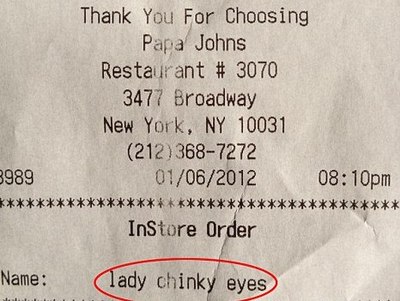
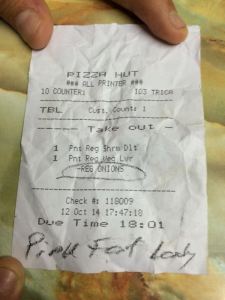
In 2012, a picture of Pink Fat Ladya Papa John’s receipt with its racial slur was retweeted 25,000 times in two hours. And in October, 2014 a similar incident happened at a Pizza Hut. These incidents generated huge press coverage for the wrong reasons for their brands and prompted apologies from the C-level of both companies.

Leadership development speaker Mark Sanborn posted in his blog about being told that to catch an earlier flight but with a downgrade from first class to coach, it still would cost him an additional $75. It didn’t matter that he was a United 1K Elite traveler flying over 2 million miles with United.

People Skills Coach Kate Nasser posted in her Smart SensAbilities blog about her confrontation with Karen, the manager at the Hilton Garden Inn in Eagan. When Ms. Nasser went down to catch the cab that would take her to her appointment, the cab driver asked for her room number. Of course, she didn’t want to give it to a complete stranger. So she asked the cab driver to come back into the hotel so that they could confirm her cab reservation. Ms. Nasser explains to Karen at the front desk that she did not want to give out her room number and could Karen confirm to the cab driver that she was the client for the reserved cab. Here’s the rest of that conversation:

Karen to the cab driver: “Her room number is 210.”
Ms. Nasser: “Excuse me, you just gave my room number to this man.”
Karen:  “The cab company requires it.”
Ms. Nasser, “You just gave this man my room number.”
Karen: “Nothing has ever happened.”
Ms. Nasser: “You just gave out my room number. How are you going to fix this?”
Karen: “Are you going to argue with me or are you going to get in the cab?”

Nick Meiers posted on his Essential Hospitality blog about this conversation he overheard in a restaurant:
Guest:  “How is the rib-eye?”
Server: “I’m not sure, I’ve never eaten here. You know how it is, you don’t want to be at work when you’re not working!”

I am convinced that in each of these incidents, these employees didn’t see anything wrong to act indifferently to the customer as they did. And here is the “killer” part.  In each of these cases, their manager or owner had no clue that these employees did what they did. Of course, the owner or manager would have handled each situation differently. But they weren’t there. At that moment, the reputation of the brand was in the hands of the one employee who was. And in each case, with the amplification by social media, the brand lost big time.

So what can you do to make sure you don’t have even one of these business-killing employees?

QUI ACTION STEPS:

  • Define customer service expectations during the onboarding process. Include customer service standards in each job description. Create and review your customer service manifesto with each new hire.
  • Use these poor customer service examples and those you read or hear about to remind your team of how the actions of just one employee can damage the business and brand. Discuss proper responses in handling similar situations that could arise in your business.
  • Take immediate disciplinary action when an employee displays rude behavior to a customer.
  • Share customer feedback, good and bad, regularly with your team. Involve your employees in defining alternative responses in handling the situations that generated negative customer comments.
  • Motivate your team continuously with daily huddles to keep focused on delivering exceptional customer service.
  • Constantly ask your employees if there are any incidents or questions that need to be resolved today so they can be better equipped to handle them in the future.
  • Empower your employees to bend the rules to take care of your customers.
  • Reward, recognize. and celebrate the random acts of kindness that individual employees offer your customers.
  • Serve as a role model to your employees when interacting with your customers directly.

When you do this you will keep every one of your employees involved, engaged and committed in only offering the kind of “killer” service for which you DO want to be recognized.


8 Comments

Filed under Customer Service

Do you have a Customer Service Manifesto?

Imagine if you could get each person on your team focused on the same vision and commitment to the delivery of the World’s Best experience for each customer. Your company’s service reputation would be broadcast so loudly by all of your customer loyalists that you easily would dominate your competition. So how do you do it? How do you get everyone on your team reading from the same book? Simple. Put it in writing. Literally let them read from the same book.

Create your customer service manifesto. Your manifesto is a declaration of your company’s customer service creed, principles and intentions. Do not confuse this booklet with the employee handbook. The latter defines the legal responsibilities of the company and the employee.  Your manifesto defines your company’s service culture. The employee handbook defines the limitations of personal performance. Your customer service manifesto defines the principles that each team member should aspire to perform. Big difference.

Why is writing your customer service manifesto so important? Review your company’s first day orientation agenda for a new employee. I am sure you will find that, while benefits are reviewed, much more time is spent on company policy – email and social media guidelines, conduct on and off duty, house rules, safety, sexual harassment, and on and on. It’s like saying to a new employee, “Welcome to the company. Now here is how you can get fired.” On the first day, you spend more time explaining the obstacles more than you do how to go above and beyond to wow your customer. What’s wrong with that picture?

Your manifesto will let your employees know that you are committed to service that is not hindered by rules. Discussed separately from the rules and regulations, you initiate new employees to fully grasp the value and importance of customer service. The principles within the manifesto define the level of service to which you wish each employee to aspire. So what are the components for a customer service manifesto? Here you go:

Mission Statement – Your mission statement should answer three simple questions: What do you do? How do you do it? Who is your customer?  Keep it short. Your mission statement should be memorable and easily recitable. Disney offers one of the best examples of a mission statement:  (What do you do?) We create happiness (How do you do it?) by offering the finest in entertainment  (Who is your customer?) for people of all ages, everywhere. It is simple, yet aspirational. What is your mission? Is it memorable? Can your employees get passionate about it?

Your Company Heritage – Most businesses give a new employee a historical timeline of major events. But a heritage is something more. A heritage incorporates the “why” behind the “who, what and when”.  A heritage is the storytelling of the rich tradition of your company. Marriott employees all know the story of newly wed J.W. and Alice Marriott’s trek from Salt Lake City to Washington, D.C., the nine stool Hot Shoppe where J.W sold 5 cent A&W root beer, and the sticky nickels hand carried to the bank by Alice Marriott. What is your company’s story?

Core Values – The core values for Baptist Health Care are Integrity, Vision, Innovation, Superior Service, Stewardship and Teamwork. Yum! Brands employees focus on CHAMPS: Cleanliness, Hospitality, Accuracy, Maintenance, Product Quality, Speed of Service. What are the pillars on which your company is built?

Appearance Standards – To the customer, the employee is the company and first impressions do matter. Your message here should convey that an employee’s appearance should be a reflection of your company’s professionalism and not an employee’s personal style.

Performance Tips – Define the specific behaviors that can guide employees to act courteously with customers in person, on the phone and on-line. Include in this section the forbidden phrases like “Honey, Sweetheart.” “I don’t know.” “You should have . . .” and “To be honest with you . . .” while offering performance expectations such as answering any ringing phone within three rings or an email within 8 hours, as well as using the person’s name at every opportunity. You know how to properly interact with customers. How do you want your employees to act? Tell them by writing it down.

Service Recovery – Marriott Hotels uses the service recovery acronym LEARN: Listen, Empathize, Apologize, Respond, Notify (your supervisor and co-workers so that it does not happen again to future customers). Other businesses use the acronym LAST: Listen. Apologize. Solve. Thank (the customer for bringing the issue to your attention). What are the service recovery steps that you expect every employee to take when confronted with a dissatisfied customer?

Experience Flow Chart – Jan Carlzon, then CEO of SAS Airlines, defined a Moment of Truth as “anytime a customer comes into contact with any aspect of a business, however remote . . . to form an impression.” Whether you call it an experience flow chart or experience journey map, plot all the emotional touchpoints of the customer’s experience. The employee can then be more aware of the key opportunities to wow your customers.

Aspiration page – This last page could be customer testimonials, motivational or customer service quotes or a parable like The Starfish Finder. (Google “Starfish Finder” if you haven’t heard of this story). This last page should serve as aspiration that one person truly can make a difference in the experience of a customer.

But merely writing and distributing the customer service manifesto at orientation is not enough. Spend time with the new employee to give your personal interpretation of the meaning and importance of the key components.

QUI TAKEAWAY: Samuel Johnson said, “People need to be reminded more often than they need to be instructed.” Ritz-Carlton established itself as one of the finest luxury hotel brands by mandating a daily line-up where that day’s Ritz Carton Credo card’s performance tip is reviewed. So refer to your manifesto often and ideally discuss daily one item within it  to instill in each employee your company’s mission, values, and performance expectations. And when you do, you will see that each employee will deliver consistently the World’s Best Experience to every one of your customers.

11 Comments

Filed under Customer Service, Training

Never go to a doctor whose office plants have died.

“Never go to a doctor whose office plants have died.” Erma Bombeck

What do dead plants in the waiting room have to do with the skill of the doctor? Logically nothing, but to the customer, everything.

When we are sick, we go to the doctor because we do not know what is making us sick. The doctor is the expert. Even if he misdiagnoses the illness and prescribes the wrong medicine, we would still take his word for it since we have no experience in medical diagnosis. We assume that the doctor is the trusted authority. In fact, we assume it so much that we don’t ask the doctor to prove it. No one has ever walked into a doctor’s office to ask “Before you examine me, from what medical school did you graduate?” We take his expertise for granted because we have no benchmark.

But we can judge a doctor on what we do know. We know what clean and orderly looks like. We know what friendly looks and sounds like. We know what waiting too long feels like. And we certainly know what dead looks like. And with past experiences, we can judge how our doctor visit stacks up to those experiences. And based on the entire experience we will decide whether to come back or not, and depending on the experience, will either refer our friends or tell the world to stay away with an online bad review. Is that logical? Of course not, but as management consultant Tom Peters says,

“Customers perceive service in their own unique, idiosyncratic, emotional, irrational, end-of-the-day, and totally human terms. Perception is all there is!”

When there are dead plants in the waiting room, the customer is saying to himself, “If they can’t even take care of the plants, why do I want them taking care of me?”

While a general manager at a resort up north in Michigan, I served as an adjunct instructor for many years teaching customer service at the local community college. To their credit (pardon the pun), the college made my customer service class a prerequisite for the office administration and medical administration paths. They understood that it is not what you know; it is how you say it. At the end of the semester, a survey was given to the students on how I did. Was I on time for class? Did I cover the objectives defined in the syllabus? Was I available after hours? All the survey questions were focused on the instructor. As part of the class session discussing customer feedback, I surveyed the students on their school experience. My question was, “If there was anything you could improve in your education experience, what would that be? Very few answers were specific to what the administration thought was the college experience. Rather the improvements ranged from the parking lot to the restrooms. What does the parking lot have to do with higher education? Logically, nothing. But to the female student who is taking night classes, everything. She perceives a burned-out light in the lamp post as an unsafe parking lot. What does the restroom have to do with the education offered? Nothing. But as a female student wrote in her survey, “During the winter, the restrooms are so cold, I can’t even think after going in there.”

Several weeks ago, I needed to see a dentist. When I asked a friend for a referral, she gave me the name of her dentist. I asked why she thought the dentist was so good. She said the waiting room had Wi-Fi, they offered free bottled water and juice and there was a large flat-screen TV in the waiting room. And, as an afterthought, she said the dentist was nice, too. The most important aspects of her dental experience were the touchpoints that eliminated the waiting time and angst of the perception of visiting the dentist for the first time.

QUI TAKEAWAY: Don’t be too focused on just your expertise. Your customers have no way to judge you on what you know. But they can grade you on the other touchpoints that they have experienced before. Take the time to look at your entire customer experience. Identify all the potential dissatisfiers and remove them. Then replace them with something positive.

What potential “dead plant” dissatisfiers in your customer experience are you leaving unattended?

3 Comments

Filed under Customer Experience, Customer Service

GREAT Service is GREAT Theater. Don’t be just good. Be GREAT out there out there!

In their book, The Experience Economy, Joseph Pine and James Gilmore define that “Work is theater and every business a stage.” If you were an actor delivering a great live theatrical performance, the audience becomes wrapped up in the experience and as they walk out of the theater, they are telling their friends that it was the best thing that they’ve enjoyed in a long time.

It does not matter to the audience that the actors are performing for the 100th time. The audience has paid very good money to see the show and expects the actors to deliver their performance with the same passion as on opening night. Your customers expect nothing less. As it is in Great Theater, you have to “act it like you mean it”. Do not confuse this with “fake it till you make it”. Your customers, like any audience, can see right through that kind of performance. Do you always feel like working every day, five days a week, 8-10 hours a day, on your birthday,  holidays, or even on scheduled days off? Of course not. But do you think the customer really cares how you feel? Absolutely not! No customer walks into your establishment and says, “Dissatisfy me now”. So you have to deliver Great Theater every day whether you feel like it or not.

When you perfect the delivery of the script, you perfect your performance. Break down your customer experience, act it like you mean it, and deliver Great Theater. For example:

ACT ONE. Scene One.

 The Customer enters from offstage.

SERVICE PROVIDER: “Good afternoon, how may I help you?”

Motivation: Never say “May I help you?” If the customer is standing in front of you, he obviously needs help or he would have bypassed you completely.

CUSTOMER: “I believe I have a reservation. Last name is Smith.”

SERVICE PROVIDER: “Yes, Mr. Smith, we’ve been expecting you. Welcome to The Best.”

Direction: Maintain eye contact for at least seven seconds and smile as you say your lines.

Motivation:

  • As Dale Carnegie says in his book, How to Win Friends and Influence People, “Remember that a person’s name is to that person the sweetest and most important sound in any language.” So start with the customer’s name.
  • What do you think is the very first question running through the mind of a customer when coming up to an airline counter, front desk, host stand, or reception desk? That question is, “I wonder if they have my reservation?” So to establish a great first impression, incorporate this statement into your welcome, “We’ve been expecting you.” It immediately removes that mental dissatisfier and puts the customer at ease.
  • Follow that up with the name of your business.

Let it all flow together.

“Mr. Smith” (you’re very important to us). “We’ve been expecting you.” (No need to worry about your reservation. We have it.) “Welcome to . . .” (Where did Mr. Smith feel the most comfortable in interacting with a company? With you, of course. )

QUI TAKEAWAY: Define each scene in the customer experience and practice it often offstage. Never practice on the customer. Role play with your colleagues. Then perform your role so well that all your customers say to themselves and others that your service was the best that they have enjoyed in a long time. And when you deliver that kind of Great Theater performance consistently, you will build repeat business and customer loyalty.   

QUI QUOTE: GREAT Service is GREAT Theater. Don’t fake it till you make it. Act it like you mean it. Don’t be just good. Be GREAT out there!  

#customerservice #customerexperience #custserv #custexp #cx


1 Comment

Filed under Customer Experience, Customer Loyalty, Customer Satisfaction, Customer Service, Hospitality

No Surprises. No Excuses.

Displeased young girl has a serious conversation with the hairdresser

“Customers perceive service in their own unique, idiosyncratic, emotional, irrational, end-of-the-day, and totally human terms. Perception is all there is!”

Tom Peters

When your customers call or walk into your establishment, they already have a perceived expectation of what your customer experience should be. Your advertising, website and salespeople, which serve a promise to your customers, have already shaped that expectation. Deliver on that promise and your customers come to trust you. Fall short and you have broken that promise and trust. For example, a restaurant menu is a promise to your customers that what is printed on the menu is what you have to offer. If you have to tell a customer that he has an old menu, the new menus haven’t been delivered by the printer and the dry-aged steak is not on the new menu, then to the customer, you failed. He doesn’t care about the printer. All he cares about is his steak. And you failed to deliver it. And his perception is all there is.

Customers don’t care that it’s your first day on the job. They don’t care that you are understaffed because someone called in sick. Customers don’t care that the computers were down when they called.  They only care that they are your customers.  They are willing to give you their hard-earned money in exchange for an experience that they feel is more valuable to them than their money.  And when they come to you, they never have an expectation that they will be dissatisfied.

So how do you live up to your customers’ expectations? At the very least the customer experience you deliver should be with no surprises and no excuses. To your customers, any experience less than their expectation is perceived as a dissatisfying surprise. And any reason you offer to explain why you could not deliver is perceived as an excuse. And their perception is all there is.

So do everything you can to make sure there are no negative surprises. Get rid of any potential dissatisfiers.  For example, remove forbidden phrases such as “I’ll be back in a second,” Can you hold for just a minute?” and “I’ll be right with you.” Such phrases only frustrate a customer when more than 60 seconds go by.  Review all the customer touchpoints and take any negative issue and make it a neutral.  Minimize wait times. Clean dirty restrooms. Create “no hassle” return or exchange policies.  Then, as Larry Winget, the Pitbull of Personal Development puts it, “Do what you said you would do, when you said you would do it, the way you said you would do it.”  That’s it. It’s that simple.  Just “do what you said you would do, when you said you would do it, the way you said you would do it.”

And if the customer is unpleasantly surprised because you could not deliver, then offer no excuses. Simply apologize. Even if the customer asks for a reason, just say, “It doesn’t matter. We failed. It should never have happened and I apologize.” Remove the surprise and offer some form of atonement.

QUI TAKEAWAY: To drive customer loyalty, deliver to each customer an experience that has “No Surprises. No Excuses.”

3 Comments

Filed under Customer Experience, Customer Loyalty, Customer Satisfaction, Customer Service

Your Satisfied Customers Are Leaving You

Too often, the only way a business asks for customer feedback is with the question, “How was everything?” And for many owners and managers, the response “Everything was fine.” is enough. If you are one of those who is satisfied with “Fine”, then know that your customers are leaving you.

Be Your Customer. You hear of a new restaurant in town. You decide to try it out. There is no hostess upon arrival. When she does return back to the stand five minutes later, she curtly asks “How many?” with no other greeting. During service the server wasn’t rude, but he certainly wasn’t exceptional. The meal took slightly longer to be served than you expected. The beverages were never refilled until you asked. Yet when the manager comes up to the table and asks, “So how is everything?”, what do you say? “Fine.” The manager is thinking, “Another satisfied customer,” but you’re thinking to yourself, “Never again.” Your customers are no different. If service is only adequate, there is no real desire to return.

Maybe that’s too harsh. What I’m saying is that if your customers perceive your service as merely satisfactory, it simply is not good enough for them to want to return. They’re perfectly satisfied for the moment, but they’ll switch to a competitor if something better or less comes along.

Loyalty among satisfied customers is fleeting. In fact, research conducted by Xerox and featured in a Harvard Business Review report by Thomas Jones and W. Earl Sasser, Jr. found out that on a 1-to-5 satisfaction scale, the very satisfied customers who ranked their experience a 4 were six times more likely to defect than the extremely satisfied customer who rated their experience a 5. Creating only satisfied customers will not build your business. In fact, if you are only creating satisfied customers, your business will suffer. Proof? How about Circuit City versus Best Buy? Borders versus Barnes and Noble? KMart versus Wal-mart?

Does your product have such an overwhelming quality or price advantage that your customers won’t consider your competitor? If not, then the key criteria to driving loyalty will be how your customers perceive their overall service experience.

If you want to retain your customers and grow your business, you need to deliver service that exceeds their expectations and more than satisfies them. So how do you do it? You must deliver a consistent experience without any dissatisfiers and full of positive Moments of Truth.

So what is the QUI takeaway in this one? Continue to ask the question, “How was your experience?” And when a customer responds, “Fine,” immediately ask, “Is there any one thing we could have done to make it more enjoyable for you?” Then do whatever it takes to deliver it before he has a chance to walk out the door.

Leave a comment

Filed under Customer Experience, Customer Loyalty, Customer Satisfaction, Customer Service

Your voice mail greeting is costing you business.

Angry Business Man Hears Something Annoying on His Phone

Of course, the best customer service is to have any person answer any phone ringing. But if you’ve decided that voice mail is acceptable, does your voice mail greeting sound something like this: “This is (My Name). I am either away from my desk or on the phone. . . ”  or “You have reached the office of . . .” or “You have reached the desk of . . .”  If yours sounds like any of those, then your voice mail greeting is costing you business.

Be your customer:

  1. In a phone conversation, there are two people on the line – your customer and you. With your greeting, of the two of you on the phone, who are you saying is more important – you or your customer? If you have one of those “I am either away from the desk or on the phone” you’re saying to your customer, “I’m so important that I have to tell you where I am even when I’m not here.” Now really, do you think your customer cares what you’re doing when you can’t take his call? Really?
  2. Do you really want your customer to think that you believe your office or your desk are animate objects that actually answer the phone on your behalf? Your customers don’t want a relationship with your office or your desk. They want one with you.
  3. When your customer calls you, do you think he really wants to get your voice mail?

Remember, the customer is paying for his experience, not yours. Whatever you think is your reason you give on voice mail for not answering the phone, whether you really are away from your desk or on the phone – your experience – is still perceived as an excuse by your customer for not being there – his experience.

So what should it sound like? How about something like this:

“At Your Service, this is Your Name, Your Position for Your Company. I apologize that I’m unable to take your call personally at this time. Press the one key at any time to begin recording. My email address is SPELL OUT YOUR NAME @Your Company. If you wish, please leave your name and number and the best time to contact you, and I will return your call. Thank you for calling.”

“At Your Service” . . . It’s a reminder to your customer that you understand what your role is in the business relationship. And it will certainly differentiate you from your competition.

“I apologize . . .” What the customer is hearing is: “Since I’m not here to speak to you as you expected, I want to apologize. . .”

“ . . to take your call personally . . .”. Customer service is all about relationships. Given a choice, people would always prefer to buy from people they know, like, and trust.  And people like and trust more those people who personalize the experience for each individual customer.

“Press the one key. . . ” so that they know what to do on future calls.

“My email address . . . “ Rather than play telephone tag, many callers who can’t connect with you on the phone will send an email immediately after hanging up.

“Thank you for calling.” People also buy from people who want their business. How do you show someone you want their business? Just say “Thank you.”

There is one group who will read this and say to themselves, “Boy, that’s over the top. It’s not that big of a deal. It’s only voice mail. I’ll just stay with my greeting.” There is another group who will read this and will say to themselves and others who work in their organization that they will adopt my VM greeting example because it removes a potential customer dissatisfier. They understand that they cannot begin to truly satisfy a customer until they remove all the potential dissatisfiers. That second group makes every effort to remove any potential dissatisfiers, even what they believe may be a small one because they “think like their customer.” And if it’s a big deal to the customer,  it’s a big deal to them. And that second group, well, they’re competing with the first group for the same customer and differentiating themselves from their competitors. Which group are you in?

Leave a comment

Filed under Customer Service, Hospitality, Marketing, Training

To be the World’s Best, Be Your Customer.


How do you get your customers to feel that their experience with your business is so over the top that they want to tell the world? For them to be WOWED, answer this question for your customer “What would World’s Best look like?” or “WWWBLL”. The “World’s Best” experience is not as “the world” sees it, but as the customer personally feels it. 

The customer pays for their experience. And they seek the best value in their experience for the price you ask them to pay. So a person living in Detroit having a five-figure salary feels the best value isn’t a luxury plane to the Swiss Alps, but rather a four-hour drive to Boyne Mountain.

Once you understand the expectation of WWWBLL for your customer, then you need to deliver that experience consistently. There are Three Principles to answering the WWWBLL question: Be Your Customer. Create Their Experience. Be the Difference.

Principle One of the WWWBLL Experience: Be Your Customer

To your customers, their perception is their reality. Jan Carlzon, then president of SAS Airlines, coined the phrase “Moment of Truth,” which defines any time a customer comes into contact with any aspect of a business, and based upon the collective sum of those “Moments of Truth” forms an unshakeable perception of that company.

Why is the male grooming standard at Disney theme parks so strict? If children are not brought to Walt Disney World by their parents, they are brought by their grandparents. Ask Grandma if she would leave her grandchild in the care of the teen attendant with visible body tattoos, long hair, unshaven beard, and multiple body piercings – a Moment of Truth. Grandma may not say it, but she certainly thinks, “Of course not! If he’s not doing drugs, he’s probably selling drugs.” That attendant could be Disney’s Cast Member of the Month. It doesn’t matter. Grandma’s perception is her reality.

If you dine in a restaurant for the first time and have a decent meal, but, in the end, step into the restroom – a Moment of Truth – and you find it filthy, you may not return. You are thinking, “If the owner doesn’t feel restroom cleanliness is important, he probably doesn’t think it’s important in the kitchen either.” Your perception is that if the restroom looks and smells this bad, how clean could the kitchen be? And your perception is your reality.

Customers buy with emotion and justify that decision with reason. Customers are willing to pay a premium because it makes them feel better emotionally. Think about a Four Star resort spa experience. The reality is that you will go into a private room and take off all your clothes. A complete stranger is going to come into that room and for fifty minutes touch you all over your body. And for that experience, you pay the spa about a hundred dollars. Realistically why would you do that? Because emotionally you believe you feel so much more relaxed, it was worth it. Your perception is your reality.

If you want to relax at home, envision yourself in a “Calgon, Take Me Away” moment, soaking in a bubble bath, surrounded by candles, listening to Kenny G. You can go to any dollar store and buy a pack of ten emergency candles for a dollar. That makes each candle just ten cents – very reasonable. But for some of you, that is laughable. If you are going to relax, dollar-store candles just won’t do. You’ll return to that spa and get one of their scented candles. The spa sells candles for ten dollars each. You could get one hundred dollar-store candles for just one spa candle. One hundred candles! You could have a bonfire in the bathroom with those candles! But which candle would make you feel better? You’d say it’s because the spa candle smells like mango-papaya. You could return to the dollar store to buy air fresheners, pop them open, and put them all over the bathroom. But you’d respond that it just wouldn’t feel the same as how the spa candle would make you feel. Your perception is your reality. You, being the customer, are willing to pay a premium because it makes you feel better. Now you are being your customer.

QUI TAKEAWAY: Your customers’ perceptions are their reality and they buy with emotion. Their expectation of customer service is no different. Maya Angelou said it best, “People will forget what you said. People will forget what you did. But people will never forget how you made them feel.” If your customers’ Moments of Truth interactions with your business are “wow’s” and, in the end, they feel great, they will be sure to tell their world of family and friends. So how do you create an experience that will emotionally bond your customer to your company?

#customerservice #customerexperience #customerloyalty #custserv #custexp #cx

Leave a comment

Filed under Customer Experience, Customer Loyalty, Customer Satisfaction, Customer Service, Hospitality

WWWBLL’s wobble but they don’t fall down.

The customer service business is full of acronyms and abbreviations: CSAT, CEM, KPI, NPS.  For those who want to drive their companies to stand above their competition, let me add one more – WWWBLL. “WWWBLL” is pronounced “Weeble” just like the roly-poly toys. The toys’ tagline was “Weebles wobble, but they don’t fall down.” WWWBLL stands for “What Would World’s Best Look Like?” And just like Weebles, the World’s Best companies may wobble in this economy but they certainly won’t fall down. So to stand above your competition, define “What would World’s Best look like” for your customer and then work very hard to deliver it.

Customers make a buying decision on three criteria: cost, location and reputation. According to Ken Irons in Market Leader, 70% of a brand’s reputation is based on the customer’s perception of the interaction they have with people. Nowadays it is not only your customers’ personal interactions and subsequent word-of-mouth advertising that will drive your reputation; it is also the viral impact when those interactions are posted on social media sites like TripAdvisor, Twitter, Facebook, or Yelp. Times have certainly changed when all you had to do to build your reputation was to include handpicked testimonials in your sales packets or advertisements. Now customers reading these third-party sites take the reviews as gospel from people they have never and most likely will never meet. Communications expert Michael Angelo Caruso has identified this tendency of web surfers, “If they hear it from us it is advertising. If they hear it from someone else, it’s the truth.”

If you are in their preferred location and if your reputation is WWWBLL, then customers will come back and tell others about you. The only way to drive such rave reviews is by having your customers feel that the experience you offered was so over the top that they want to tell the world. So how do you do that? How do you create a customer experience that answers the question “What Would World’s Best look like? There are Three Principles: Be Your Customer. Create Their Experience. Make a Difference.


Leave a comment

Filed under Customer Loyalty, Customer Service, Training

The customer is paying for his experience, not yours.

Customer Satisfaction Blue Grey HorizontalThe goal of any business is to attract and retain customers. And customers actually make it very easy for you. No customer walks into your establishment and says to you, “Here is my money. Now, dissatisfy me please.” In fact, your customer comes in with an expectation that what you offer could be more valuable than his money. Nobody knowingly expects to pay good money for a poor product or service.

If it’s so easy, why isn’t your business doing so well that you are literally turning away customers? It’s because you already are turning away customers and you may not even know it. You cannot think you are only selling a commodity or service to your customers. You are not in the product business. You’re not even in the service business. You are in the experience business.

Think of your top three competitors. They have a similar product. In fact, if your competitors really wanted to, they could come pretty close to replicating it. What they can’t replicate are your people. And it is your people who deliver your experience. An American Express survey found that 70 percent of consumers are willing to spend an average of 13 percent more with companies they believe provide excellent customer service. So the good news is that if you understand that your company is in the experience business and you get the experience right, you reap more revenue and repeat customers.

The bad news is that, in the same survey, 78 percent of consumers claimed they have abandoned a transaction or not made an intended purchase because of a poor service experience.

Ultimately, for you to retain your customers you have to understand that you are in the experience business and the customer is paying for his experience, not yours.

So how do you create an experience that will retain your customers and attract new ones? Here’s how in just three steps:

  1. No Surprises.
  2. No Excuses.
  3. One Percent more.

No Surprises. Find out what that expectation is of your customer. Then deliver it plus one percent more. That’s a take on the “Underpromise. Overdeliver” service mantra. As a hotel general manager, I defined that the restaurant could never run out of any item that was on the menu. Be the Customer. The menu was actually our promise in writing. If the customer orders and the server says they have just run out of it, then it is an unexpected bad surprise for the customer. The server, manager and chef thinks it’s OK to run out of something – our experience. If they kept everything in stock beyond demand it would lead to higher food costs – still our experience. But the customer sees it on the menu and expects that he can get it with no surprises – his experience. And the bottom line is the customer is paying for his experience, not ours.

No Excuses. Of course, on busy nights, we did sell out of certain items or it took too long for an order to be served. Step two: No excuses. “I’m sorry, we had more people order that than we expected.” or “I’m sorry, we’re a little understaffed tonight.” All that is really the restaurant’s experience – our experience. Be the customer. The customer decided to eat in the restaurant with the expectation of being satisfied. Any reason the restaurant gives to the customer is “heard” as an attempt to explain why the restaurant could not deliver – an excuse. Here is what the customer is hearing “So what that you’re sorry. I still don’t’ have what I wanted.” No excuses. Better to respond to your customers with an “I apologize.” Since you could not deliver their expected experience, you need to give them something, at the very least, a sincere apology. Then follow up with a gesture of atonement.

One Percent More. Deliver an experience that is just a bit more than what the customer expected. For example, customers expect your business to open on time. Be the customer. As a customer, doesn’t it frustrate you when you go to a store that clearly posts that it will open at 8:30 a.m. and it actually unlocks the door for its first customer at 8:45 a.m. – their experience. And if you were that customer on your way to work, didn’t that 15 minutes seem more like an eternity with each passing minute – your experience. And as the customer, you were paying for your experience, not theirs. Your customers expect the same from your business. So what’s the 1%? Just make it a Best Practice to open 10 minutes before and stay open 10 minutes after your posted times. Remember, to the customer, it is not the one big wow that will separate you from your competitors; it will be the 1001 little “wows”, those one percents, that will make the big difference.

QUI TAKEAWAY: The customer is paying for his experience, not yours. Deliver their experience with no bad surprises and if there is a surprise for the customer, apologize and fix it with no excuses. And always add just that one percent more.


Leave a comment

Filed under Customer Loyalty, Customer Service, Training