
Your voice mail greeting is costing you business.

Angry Business Man Hears Something Annoying on His Phone

Of course, the best customer service is to have any person answer any phone ringing. But if you’ve decided that voice mail is acceptable, does your voice mail greeting sound something like this: “This is (My Name). I am either away from my desk or on the phone. . . ”  or “You have reached the office of . . .” or “You have reached the desk of . . .”  If yours sounds like any of those, then your voice mail greeting is costing you business.

Be your customer:

  1. In a phone conversation, there are two people on the line – your customer and you. With your greeting, of the two of you on the phone, who are you saying is more important – you or your customer? If you have one of those “I am either away from the desk or on the phone” you’re saying to your customer, “I’m so important that I have to tell you where I am even when I’m not here.” Now really, do you think your customer cares what you’re doing when you can’t take his call? Really?
  2. Do you really want your customer to think that you believe your office or your desk are animate objects that actually answer the phone on your behalf? Your customers don’t want a relationship with your office or your desk. They want one with you.
  3. When your customer calls you, do you think he really wants to get your voice mail?

Remember, the customer is paying for his experience, not yours. Whatever you think is your reason you give on voice mail for not answering the phone, whether you really are away from your desk or on the phone – your experience – is still perceived as an excuse by your customer for not being there – his experience.

So what should it sound like? How about something like this:

“At Your Service, this is Your Name, Your Position for Your Company. I apologize that I’m unable to take your call personally at this time. Press the one key at any time to begin recording. My email address is SPELL OUT YOUR NAME @Your Company. If you wish, please leave your name and number and the best time to contact you, and I will return your call. Thank you for calling.”

“At Your Service” . . . It’s a reminder to your customer that you understand what your role is in the business relationship. And it will certainly differentiate you from your competition.

“I apologize . . .” What the customer is hearing is: “Since I’m not here to speak to you as you expected, I want to apologize. . .”

“ . . to take your call personally . . .”. Customer service is all about relationships. Given a choice, people would always prefer to buy from people they know, like, and trust.  And people like and trust more those people who personalize the experience for each individual customer.

“Press the one key. . . ” so that they know what to do on future calls.

“My email address . . . “ Rather than play telephone tag, many callers who can’t connect with you on the phone will send an email immediately after hanging up.

“Thank you for calling.” People also buy from people who want their business. How do you show someone you want their business? Just say “Thank you.”

There is one group who will read this and say to themselves, “Boy, that’s over the top. It’s not that big of a deal. It’s only voice mail. I’ll just stay with my greeting.” There is another group who will read this and will say to themselves and others who work in their organization that they will adopt my VM greeting example because it removes a potential customer dissatisfier. They understand that they cannot begin to truly satisfy a customer until they remove all the potential dissatisfiers. That second group makes every effort to remove any potential dissatisfiers, even what they believe may be a small one because they “think like their customer.” And if it’s a big deal to the customer,  it’s a big deal to them. And that second group, well, they’re competing with the first group for the same customer and differentiating themselves from their competitors. Which group are you in?

Leave a comment

Filed under Customer Service, Hospitality, Marketing, Training

To be the World’s Best, Be Your Customer.


How do you get your customers to feel that their experience with your business is so over the top that they want to tell the world? For them to be WOWED, answer this question for your customer “What would World’s Best look like?” or “WWWBLL”. The “World’s Best” experience is not as “the world” sees it, but as the customer personally feels it. 

The customer pays for their experience. And they seek the best value in their experience for the price you ask them to pay. So a person living in Detroit having a five-figure salary feels the best value isn’t a luxury plane to the Swiss Alps, but rather a four-hour drive to Boyne Mountain.

Once you understand the expectation of WWWBLL for your customer, then you need to deliver that experience consistently. There are Three Principles to answering the WWWBLL question: Be Your Customer. Create Their Experience. Be the Difference.

Principle One of the WWWBLL Experience: Be Your Customer

To your customers, their perception is their reality. Jan Carlzon, then president of SAS Airlines, coined the phrase “Moment of Truth,” which defines any time a customer comes into contact with any aspect of a business, and based upon the collective sum of those “Moments of Truth” forms an unshakeable perception of that company.

Why is the male grooming standard at Disney theme parks so strict? If children are not brought to Walt Disney World by their parents, they are brought by their grandparents. Ask Grandma if she would leave her grandchild in the care of the teen attendant with visible body tattoos, long hair, unshaven beard, and multiple body piercings – a Moment of Truth. Grandma may not say it, but she certainly thinks, “Of course not! If he’s not doing drugs, he’s probably selling drugs.” That attendant could be Disney’s Cast Member of the Month. It doesn’t matter. Grandma’s perception is her reality.

If you dine in a restaurant for the first time and have a decent meal, but, in the end, step into the restroom – a Moment of Truth – and you find it filthy, you may not return. You are thinking, “If the owner doesn’t feel restroom cleanliness is important, he probably doesn’t think it’s important in the kitchen either.” Your perception is that if the restroom looks and smells this bad, how clean could the kitchen be? And your perception is your reality.

Customers buy with emotion and justify that decision with reason. Customers are willing to pay a premium because it makes them feel better emotionally. Think about a Four Star resort spa experience. The reality is that you will go into a private room and take off all your clothes. A complete stranger is going to come into that room and for fifty minutes touch you all over your body. And for that experience, you pay the spa about a hundred dollars. Realistically why would you do that? Because emotionally you believe you feel so much more relaxed, it was worth it. Your perception is your reality.

If you want to relax at home, envision yourself in a “Calgon, Take Me Away” moment, soaking in a bubble bath, surrounded by candles, listening to Kenny G. You can go to any dollar store and buy a pack of ten emergency candles for a dollar. That makes each candle just ten cents – very reasonable. But for some of you, that is laughable. If you are going to relax, dollar-store candles just won’t do. You’ll return to that spa and get one of their scented candles. The spa sells candles for ten dollars each. You could get one hundred dollar-store candles for just one spa candle. One hundred candles! You could have a bonfire in the bathroom with those candles! But which candle would make you feel better? You’d say it’s because the spa candle smells like mango-papaya. You could return to the dollar store to buy air fresheners, pop them open, and put them all over the bathroom. But you’d respond that it just wouldn’t feel the same as how the spa candle would make you feel. Your perception is your reality. You, being the customer, are willing to pay a premium because it makes you feel better. Now you are being your customer.

QUI TAKEAWAY: Your customers’ perceptions are their reality and they buy with emotion. Their expectation of customer service is no different. Maya Angelou said it best, “People will forget what you said. People will forget what you did. But people will never forget how you made them feel.” If your customers’ Moments of Truth interactions with your business are “wow’s” and, in the end, they feel great, they will be sure to tell their world of family and friends. So how do you create an experience that will emotionally bond your customer to your company?

#customerservice #customerexperience #customerloyalty #custserv #custexp #cx

Leave a comment

Filed under Customer Experience, Customer Loyalty, Customer Satisfaction, Customer Service, Hospitality

WWWBLL’s wobble but they don’t fall down.

The customer service business is full of acronyms and abbreviations: CSAT, CEM, KPI, NPS.  For those who want to drive their companies to stand above their competition, let me add one more – WWWBLL. “WWWBLL” is pronounced “Weeble” just like the roly-poly toys. The toys’ tagline was “Weebles wobble, but they don’t fall down.” WWWBLL stands for “What Would World’s Best Look Like?” And just like Weebles, the World’s Best companies may wobble in this economy but they certainly won’t fall down. So to stand above your competition, define “What would World’s Best look like” for your customer and then work very hard to deliver it.

Customers make a buying decision on three criteria: cost, location and reputation. According to Ken Irons in Market Leader, 70% of a brand’s reputation is based on the customer’s perception of the interaction they have with people. Nowadays it is not only your customers’ personal interactions and subsequent word-of-mouth advertising that will drive your reputation; it is also the viral impact when those interactions are posted on social media sites like TripAdvisor, Twitter, Facebook, or Yelp. Times have certainly changed when all you had to do to build your reputation was to include handpicked testimonials in your sales packets or advertisements. Now customers reading these third-party sites take the reviews as gospel from people they have never and most likely will never meet. Communications expert Michael Angelo Caruso has identified this tendency of web surfers, “If they hear it from us it is advertising. If they hear it from someone else, it’s the truth.”

If you are in their preferred location and if your reputation is WWWBLL, then customers will come back and tell others about you. The only way to drive such rave reviews is by having your customers feel that the experience you offered was so over the top that they want to tell the world. So how do you do that? How do you create a customer experience that answers the question “What Would World’s Best look like? There are Three Principles: Be Your Customer. Create Their Experience. Make a Difference.


Leave a comment

Filed under Customer Loyalty, Customer Service, Training

The customer is paying for his experience, not yours.

Customer Satisfaction Blue Grey HorizontalThe goal of any business is to attract and retain customers. And customers actually make it very easy for you. No customer walks into your establishment and says to you, “Here is my money. Now, dissatisfy me please.” In fact, your customer comes in with an expectation that what you offer could be more valuable than his money. Nobody knowingly expects to pay good money for a poor product or service.

If it’s so easy, why isn’t your business doing so well that you are literally turning away customers? It’s because you already are turning away customers and you may not even know it. You cannot think you are only selling a commodity or service to your customers. You are not in the product business. You’re not even in the service business. You are in the experience business.

Think of your top three competitors. They have a similar product. In fact, if your competitors really wanted to, they could come pretty close to replicating it. What they can’t replicate are your people. And it is your people who deliver your experience. An American Express survey found that 70 percent of consumers are willing to spend an average of 13 percent more with companies they believe provide excellent customer service. So the good news is that if you understand that your company is in the experience business and you get the experience right, you reap more revenue and repeat customers.

The bad news is that, in the same survey, 78 percent of consumers claimed they have abandoned a transaction or not made an intended purchase because of a poor service experience.

Ultimately, for you to retain your customers you have to understand that you are in the experience business and the customer is paying for his experience, not yours.

So how do you create an experience that will retain your customers and attract new ones? Here’s how in just three steps:

  1. No Surprises.
  2. No Excuses.
  3. One Percent more.

No Surprises. Find out what that expectation is of your customer. Then deliver it plus one percent more. That’s a take on the “Underpromise. Overdeliver” service mantra. As a hotel general manager, I defined that the restaurant could never run out of any item that was on the menu. Be the Customer. The menu was actually our promise in writing. If the customer orders and the server says they have just run out of it, then it is an unexpected bad surprise for the customer. The server, manager and chef thinks it’s OK to run out of something – our experience. If they kept everything in stock beyond demand it would lead to higher food costs – still our experience. But the customer sees it on the menu and expects that he can get it with no surprises – his experience. And the bottom line is the customer is paying for his experience, not ours.

No Excuses. Of course, on busy nights, we did sell out of certain items or it took too long for an order to be served. Step two: No excuses. “I’m sorry, we had more people order that than we expected.” or “I’m sorry, we’re a little understaffed tonight.” All that is really the restaurant’s experience – our experience. Be the customer. The customer decided to eat in the restaurant with the expectation of being satisfied. Any reason the restaurant gives to the customer is “heard” as an attempt to explain why the restaurant could not deliver – an excuse. Here is what the customer is hearing “So what that you’re sorry. I still don’t’ have what I wanted.” No excuses. Better to respond to your customers with an “I apologize.” Since you could not deliver their expected experience, you need to give them something, at the very least, a sincere apology. Then follow up with a gesture of atonement.

One Percent More. Deliver an experience that is just a bit more than what the customer expected. For example, customers expect your business to open on time. Be the customer. As a customer, doesn’t it frustrate you when you go to a store that clearly posts that it will open at 8:30 a.m. and it actually unlocks the door for its first customer at 8:45 a.m. – their experience. And if you were that customer on your way to work, didn’t that 15 minutes seem more like an eternity with each passing minute – your experience. And as the customer, you were paying for your experience, not theirs. Your customers expect the same from your business. So what’s the 1%? Just make it a Best Practice to open 10 minutes before and stay open 10 minutes after your posted times. Remember, to the customer, it is not the one big wow that will separate you from your competitors; it will be the 1001 little “wows”, those one percents, that will make the big difference.

QUI TAKEAWAY: The customer is paying for his experience, not yours. Deliver their experience with no bad surprises and if there is a surprise for the customer, apologize and fix it with no excuses. And always add just that one percent more.


Leave a comment

Filed under Customer Loyalty, Customer Service, Training

“If you knew then what you know now” in 140 characters.

If you want only a five-minute speech, it will take me two weeks to prepare.” — Mark Twain.

In just the recent past, job coaches were recommending that candidates have an elevator speech ready for any opportunity. Then it became a sound bite. Now a candidates’ opportunity may be only within the 280 characters of Twitter. So let’s turn the tables. As a leader, you serve as a mentor for the people who will want to succeed. They use Twitter as much as we use email. So in 280 characters, what advice would you give? Sorry, no short links or video allowed. I’ll compile and publish the very best, crediting you. So what worldly leadership wisdom would you tweet?

1 Comment

Filed under Leadership, Training

Customer Service: Common Sense But Not Common Practice

Earning customer loyalty is ultimately about creating and maintaining relationships. Over 70 years ago Dale Carnegie wrote the very best book on building relationships, “How to Win Friends and Influence Others.” While the stories are too dated to be relevant for most people, the fundamentals defined by Dale Carnegie many years ago are still customer service gold today. Mr. Carnegie defined the six ways to make people like you:

  1. Become genuinely interested in other people.
  2. Smile.
  3. Remember that a person’s name is to that person the sweetest and most important sound in any language.
  4. Be a good listener. Encourage others to talk about themselves.
  5. Talk in terms of the other person’s interests.
  6. Make the other person feel important and do it sincerely.

Over seventy years ago, Mr. Carnegie recommended making the other person feel important by using that person’s name. Common sense. But is it common practice? You decide. Let’s use your credit card as an example.

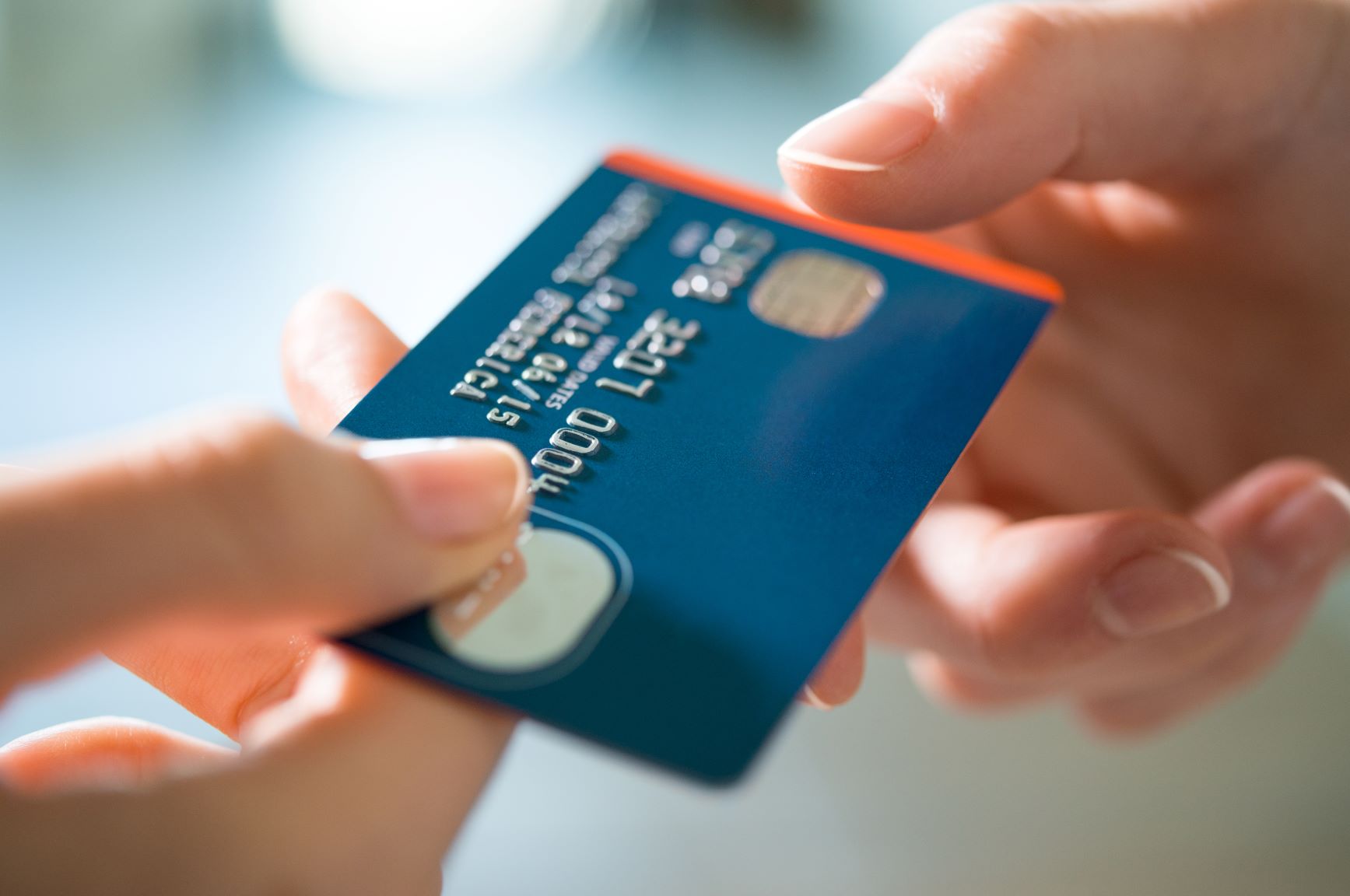
Be the Customer. A credit card is only a piece of plastic but it is very personal and valuable to you. Should you ever lose it, you would be panicking about identity theft or credit card fraud. When you make an in-person retail purchase, you hand a credit card with your name printed right on it to the cashier. In handing it back to you, the cashier may simply place it on the counter. To the cashier, it is simply a piece of plastic. To you, it represents money. 

Following Mr. Carnegie’s advice, all a business needs to do to win a customer is to use the customer’s name at every opportunity. Seems common sense, But is it common practice? The last five times you used your credit card, how many times did the cashier use your name in giving it back to you? Rarely, if at all. An opportunity to embrace you, as a customer, is lost.

If I were a retailer, I would make sure that the card swipe would post the customer’s name on the mini screen in front of the cashier. I’d educate every cashier to hand the card, or if the purchase was contactless, then hand the bag with the purchased items to the customer, look to the customer to establish eye contact (trust), and sincerely say with a smile, “Mr. Customer’s Name. Thank you for choosing [Name of Company]. We really appreciate it.” That small wow would make a big difference in winning the customer.

QUI QUESTIONS: What are you doing to make your customer feel important? And what are you doing to make sure it is common practice?

Leave a comment

Filed under Customer Service, Training

Thank you, Mr. Marriott.

You know you are getting older when, instead of attending birthday parties and weddings, you are attending funerals. I’ve come to realize that some of the greatest stories about individuals and their impact on others only seem to come out in the eulogies. Before I get any older, I wanted to express my admiration and appreciation for the example Mr. Marriott gave me as a leader and how it has formed my management style.

While still in college, I joined Marriott in 1976 as a charter member of Marriott’s Great America in Santa Clara. And just 5 years later, I was fortunate to serve as the opening director of services for Marriott’s 100th property, the Maui Marriott Resort, the first in the state of Hawaii. What I remember to this day was how Mr. Marriott would walk the backstage areas and greet everyone with a smile and a handshake. He didn’t wait for someone to approach him. He initiated the interaction. As managers, we all went through orientation where we learned the mantra of J.W. Marriott, Sr., “Take good care of your employees and they’ll take good care of the customers.” And in the gesture of Mr. Marriott, Jr. walking around to introduce himself to all of us, it was obvious the mantra wasn’t simply a slogan, but really something that drove the leadership philosophy of the company. While I left Marriott shortly thereafter I always remembered that example.

Eight years ago, while I was general manager, The Inn at Bay Harbor became the first Renaissance franchise in Michigan. While Mr. Marriott was not able to attend the conversion ceremonies, the regional team, all of the same generation as Mr. Marriott, exhibited the same genuine warmth in greeting all our associates and welcoming them to the extended Marriott family. And every Marriott regional VP has done that with every subsequent visit. That gesture was very apparent to me because I had not seen that kind of management culture since leaving Marriott.

Thirty-five years after my first day at Great America, I was the charter general manager of The Henry – Autograph Collection which for 21 years stood as the Ritz-Carlton Dearborn. Mr. Marriott came through on a tour of the property. Since The Henry is a franchise, he did not have to do that during his two-day tour as there are many Marriott managed properties in Detroit. But he did. Serving many years as a Board member of General Motors, he had visited often when it was a Ritz-Carlton. Many of the same associates were there to greet him on his first visit to The Henry. We had the line of associates upon his arrival and he took the time to shake everyone’s hand. But what I remember was that on our tour of the property, he made it a point to acknowledge every associate as he had done in Maui.

Between my days in Maui and my time at The Henry, I have worked for other corporate hotel companies and had the chance to meet very senior staff and had them visit my properties. I can tell you that the genuine appreciation that Mr. Marriott shows on every visit to every associate just doesn’t happen in other hotel companies. And there just doesn’t seem the sense of collaboration, that “we are in this together” feeling that Marriott leaders create. The lesson here: It all starts at the top. A handshake and a smile from the Chairman may seem like a very small thing, but it certainly made an impact on my leadership style. From day one, I understood you simply can’t lead from the corner office.

I am sure many Marriott current staff and alumni have stories on how Mr. Marriott and Marriott International have affected their lives. What’s yours?

1 Comment

Filed under Hospitality, Leadership

Remove all the dissatisfiers: FORBIDDEN PHRASES

“Customers perceive service in their own unique, idiosyncratic, emotional, irrational, end-of-the-day, and totally human terms. Perception is all there is!” Tom Peters.

Your Number One work responsibility is to WOW new customers and have customers return loyally, raving to others. So, how do you do that? Be the customer. The customer pays for his experience, not yours. To them, image is everything, perception is reality, and feelings are facts. They buy with emotion and justify that decision with reason. So he seeks the best emotional value in his experience, not your logical best price, service, or product. When your customer interacts with you, you are not representing the company. You ARE the company. And, as the company, you cannot begin to satisfy customers until you remove all the potential dissatisfiers. That means removing Forbidden Phrases. Forbidden Phrases are those that could potentially give a customer a bad impression of you and your company. The customer seeks his best value, and, bluntly, one of the Forbidden Phrases is a poor one. Here are just a few:

“I’m new here.” “I’m in training.” “It’s my first day.” Be the customer. If you’re going to pay your hard-earned money, do you want to be served by a rookie? Your customer is no different. Saying that you’re new is your experience. The customer is seeking the best value for their experience. When you say you’re in training, your service is a poor value for his experience. Even more, customers don’t care about your experience. All they care about is their experience. 

PROPER: Simply don’t use these phrases. The customer seeks a GREAT experience, and you simply want to give it to them as best you can.

“You’ll have to go to (call) …” The customer pays for his experience, not yours. He doesn’t HAVE TO do anything.

PROPER: You may have said, “Could you go to (call ) …”, but he might have a “pass onto pass onto pass onto …” negative experience.

It’s best to say, “Let me walk you to the call…” and do it quickly.

“To be honest with you …” What is the customer hearing? “… because I lie to you the rest of the time.”

PROPER: Simply do not use any of these phrases. You’re not lying to him because you haven’t said anything. And the best value for the customer’s experience is one that is quick, easy, and painless. 

“That’s not my job.” Be the customer. “Well, it looks like you work here. Why isn’t it your job and why don’t you find the person who does?” 

“I don’t know.” When you say “I don’t know,” you are saying to your customer, “I don’t know. They didn’t train me well, and this company always keeps me in the dark.”

“I think …” or “I believe …” “What time does the mall across the street open on Sunday?” “I think 11 a.m.” Here is what the customer is hearing you say, “I have no clue, but here is my best guess… “

PROPER PHRASE: “That’s a great question. Let me find out for you.” The best value for the customer is an experience when they feel they have all a great question.

“Okay.” Your customers may be parents. When they asked their six-year-old, “Are you going to clean your room before dinner?” and the child said, “Okay,” what were the parents thinking? When the parents asked their sixteen-year-old, “You’re going to be home by midnight, right?” and the teen said “Okay,” what do you think the parents were thinking? “Okay” to them means “Maybe. Maybe not.” So when you say “Okay,” the customer is hearing “Maybe. Maybe not.” Or he is hearing “Okay,” which means “good.” So your customer feels your service is good, not better, just average. Nobody raves about average. 

“No problem.” Your customer has every expectation that his experience will be problem-free. No customer ever calls or walks into your establishment to proclaim, “Here I am. Here’s my money. Dissatisfy me now.” When you say, “No problem,” your customer is thinking, “Why? Was there a possibility that it would be a problem? At the same time, “No problem” means “no problem to you.” What you are saying to your customer is, “Of the two of us, I am the star of the show. And you are asking something so small that it is no problem.” Not exactly customer-centric, are you?

“Okay” and “No problem” are saying to the customer, “We will meet your minimal expectations”. And since you are intent on delivering outstanding service, should anything simply be “okay” or “no problem”? Of course not.

PROPER PHRASE: “Certainly.” His experience is not just “okay” or good, without a problem or just satisfactory. It’s “certainly” better.

“That happens all the time.” For example, “The hotel key you just gave me doesn’t work on my door.” “Oh, that happens all the time.” Here is what the customer wants to ask, “Well, if it happens ALL the time here, why don’t you FIX it?”

PROPER PHRASE: “I apologize.” (More on this below.)

“Our policy is …” Be the customer. Here is what the customer is hearing you say, “What I am about to tell you will cover us. You’re simply not going to like it. But that’s your problem.”

PROPER PHRASE: Explain what the policy is, but don’t use the word “policy.”

“I’m sorry. We’re a little understaffed.” or “Someone called in sick today.” or “I’m sorry” plus any reason why you were unable to deliver.

Customers do not expect to be dissatisfied when they walk into your establishment. Any explanation you give about why you did not meet their expectations is not being heard as a reason. It’s being heard as an excuse. They don’t want an excuse. Customers are paying for their experience, not yours. “I’m sorry” is your experience. Bluntly, they don’t care how you feel. What’s in it for them? Customers want action, not excuses. At the very least, you should give him an apology.

PROPER PHRASE: Simply say “I apologize,” with no excuses, and do whatever it takes to work towards a resolution, even if it means recommending him to your competitor. Don’t “fire” the customer. Simply ask him to “resign.” “I apologize, but we can’t find a solution for you. Could I recommend this company (your competitor)? I could call them if you like.” Both are happy. The customer is happy because you found a quick fix. He has an emotional connection. The more emotional the connection, the more memorable the experience, the more loyal the customer. Ideally, the customer will remember and return later. The competitor is happy because you referred a customer to them. The competitor may refer a customer to you when they can’t fix a problem. A Mutual Admiration Society of sorts. 

QUI TAKEAWAY: Are there any Forbidden Phrases that are specific to your industry? “Checking in? or “Checking out?” for hotels. “Just one?” or “Are you done with that?” for restaurants. Identify and eliminate them from conversations with your customers, and you will be on your way to delivering a problem-free, exceptional experience for them.

Leave a comment

Filed under Customer Satisfaction, Customer Service, Hospitality, Training

Word of mouth advertising is NOT the best form of advertising.

I ask my audience, “What is the best form of advertising to build market share?” Invariably, almost everyone responds “word-of-mouth.” Yet I tell them they are wrong.

The reach of word-of-mouth has gone well beyond just family and friends. People are turning to the internet to use sites like Yelp, TripAdvisor, and even Facebook to make buying decisions. While the reviews and advice are virtual, it is still word-of-mouth advertising. Customers do it and most likely with technological advances, will do it even more. While customers don’t know any other customers, they trust their reviews. Michael Angelo Caruso, leadership and communication consultant, says it like this: “If I tell you how great I am, it’s advertising. If someone else tells you how great I am, it’s the truth.”  Customers trust the reviews and ratings of complete strangers over advertising. But here’s the catch. Customers not only are looking at the good reviews. They’re making a no-buy decision on the poor reviews, too. For example, if a customer is looking for a hotel, he may veer away from one that has customers post reviews of paper-thin walls or poor housekeeping. A bad review will hurt you more than a good one will help.

So simple word-of-mouth, be it in person or on the internet, is not the best form of advertising. The best form of advertising is “positive word-of-mouth.”

There are three things that happen after you do business with a customer.

  1. You do not meet the customer’s expectations. The customer is dissatisfied, never saying anything to you, but rants to everyone, including those he does not even know.
  2. You meet his expectations but, in his mind, did nothing to set you apart. He may be satisfied, but he tells no one.
  3. You exceed the customer’s expectation where he wants to continue to do business with you. Not only does he loyally return, he raves about you to others, even those he does not know.

QUI TAKEAWAY: It takes more than meeting a customer’s expectations to drive positive word-of-mouth advertising. Satisfied customers feel their experience is good, not better, just average. Nobody raves about average. And satisfied customers will leave when they find something better or less expensive. Exceeding customers’ expectations is the only outcome that actually builds your business. In order to become raving fans, customers must experience an interaction that is simply over the top. They must walk out your doors and say “Wow! That’s the best thing that has happened to us today.” Without the “wow” there is no rave review. And if you are not generating rave reviews, you simply are not generating enough positive word-of-mouth advertising to build your business. So, today, don’t treat customers as they would have expected. And don’t treat them more than they want to be treated. Instead, treat them a little better than they want to be treated. Don’t serve to sell. And don’t serve to satisfy customers. Instead, serve to WOW them. Serve to CARE. Be Magnificently Boring! And Be GREAT out there!


Leave a comment

Filed under Customer Experience, Customer Satisfaction, Customer Service, Hospitality, Training

Why being Number One Matters.

Several months ago, I was speaking in Portland, Maine. I flew in the evening before the event, would do the presentation in the morning, and be flying back by the afternoon. So I only had one night in Portland. And if you are in Maine for only one night, there is only one thing you want for dinner. Lobster. So what would you ask the front desk agent for your only dinner in Portland, Maine? Just like you, I asked, “Where is the best place for lobster?” Not “Where is the second or third best place?” Not “Give me any old place.” “Where is the best place?”

I never met that agent before and most likely will never meet her again, but I will take her recommendation over any of the ads in the local dining guide. Or I’ll use Yelp, UrbanSpoon, or OpenTable and check out which restaurant has the highest ratings. Why? We trust their opinion over advertising. word of mouth advertising, whether in person or online, will trump print, TV, or radio ads every time.

Some may make a buying decision based on price. They want something that is the least expensive. But if price is not the driver, then people want to buy the best. If you saw a sign on a new salon that read “The cheapest hair coloring in town,” would you go in? No, because you equate price with quality. But even in the case of a lobster dinner in Maine, it is not about the product. Maine lobster is great lobster but many restaurants offer it in Maine. Even in your business, your competitors, if they really wanted to, could replicate or create a similar product. So if it’s not about the product, then it is all about the service and your customer’s experience. Wolfgang Puck, the celebrity chef says “If I go to a restaurant and the food is okay, but the service is great, then I’ll go back. If the food is great but the people aren’t, I won’t go back  – and I’m in the cooking profession.”

QUI TAKEAWAY: So how do you create a customer experience that drives someone to give you a great testimonial or rave review? Your service simply must be the best for each customer. Remember, nobody raves about average. So if your service is not the best in the minds of your past customers, you don’t even get mentioned. Ultimately, if you are not the best, if you’re not Number One, you lose. You may survive, but you won’t be building market share. So don’t be average. Be the best. And be GREAT out there!


4 Comments

Filed under Customer Service, Marketing