THE QUI RULE OF THREE CUSTOMER SERVICE LEADERSHIP QUESTIONS: (Why only three? Because nobody can remember Number Four):
1. “What are you hearing from our customers?”
You cannot even begin to satisfy customers until you remove all the potential dissatisfiers within the customer experience. So, find out what your people are hearing and systematically remove any potential sources of dissatisfaction.
2. “What can I do to help?”
As much as you want your employees to fulfill your customers’ needs, you need to serve your employees to achieve theirs.
3. “What if?”
When you ask, listen intently, respond empathetically, and take prompt action to address any issues, your team members will feel respected, appreciated, and valued.
When you create a GREAT experience for your people, they will do the same for your customers, and you will earn the loyalty of both. Soon, without a focus on profits, profits will grow. Everyone’s experiences and, ultimately, their lives, will be enriched.
QUI TAKEAWAY: You can’t satisfy customers with disengaged employees. Start there. CARE for your people first.
COMMUNICATE openly, interactively, frequently, and continuously any information your people need and want to know. Listen empathetically to their concerns, questions, and complaints. Express compassion and encouragement.
APPRECIATE your people’s roles and responsibilities.
RECOGNIZE and offer accolades for team and individual accomplishments and acts of service.
EMPOWER people to make the right decisions for themselves, their colleagues, and others.
When you CARE for your people, they will feel respected, appreciated, and valued. With your support and encouragement, you will inspire and empower them to develop, not the business, but themselves and engage others. When you create a GREAT experience for your people, they will do the same for customers. Soon, without a focus on profits, profits will grow. The experiences and lives of everyone, your people and their customers and you and your business, will be enriched.
In 1976, while I was a 20-year-old student at Santa Clara University, CA, I became a part-time charter associate of Marriott’s Great America Theme Park. After graduating from college two years later, I joined Marriott Hotels and until 2021, I’ve been in full-service and luxury hotels and resorts. There was no such thing as CX, but I was doing more than serving to satisfy guests. I wanted them to have a “better than the average” experience that guests expected. So I served to WOW them. I served to CARE (Communicate. Acknowledge. Respond. Enrich). Big difference.
As a general manager/managing director for 27 of 43 years in hospitality, I planned to retire and be a customer CARE speaker, but, then, everything went south. Unfortunately, I suffered a stroke in April 2021. Overnight, I dropped from Mr. “Let’s be GREAT out there!” to Mr. Invisible. I have slurred speech and a dead right side. I hope to recover soon if my unconscious mind is willing.
Today, I can tell you that growing up and getting older are not the same. Growing up is looking forward to what is to come. Getting older is looking back at what might have been. When I was growing up wrapped up in the busyness of the business, I listened to my mental radio station WII-FM, focusing on “What’s in it for me?” Now, as I am not only getting old but already there, my focus is oh, so different.
Mark Sanborn has said, “You don’t need a title to be a leader”. So, I aspire to be a servant leader who will CARE for others.
COMMUNICATE openly, transparently, interactively, and frequently any information people need and want to know. Listen empathetically to the people’s suggestions, concerns, and complaints. Express compassion and encouragement. APPRECIATE the important roles, responsibilities, and efforts of people. RECOGNIZE, honor, and offer accolades for individual and team achievements, accomplishments, and acts of service. EMPOWER people to make the right decisions.
When I CARE, I hope to empower people to develop themselves. And, in paying it forward, they will be enthused and energized to engage with their colleagues and others.
So, today, my question is “What can I do for you?”
A veteran of over 40 years in hospitality leadership, I was, until several years ago, a customer service/customer experience speaker. Unfortunately, I suffered a stroke in April 2021. So, I have slightly slurred speech and a dead right side. Since my stroke, I’ve gone from Mr. “Let’s be GREAT out there!” as GM/Managing Director to Mr. Invisible, sequestered alone with my wife in my San Diego apartment. Today, I want to tell you my real-life customer experience story.
On Friday, I was at the downtown CVS Pharmacy sitting in my wheelchair, waiting for my prescription. Meanwhile, a young lady looked at me and motioned if she could go ahead. When I answered yes, she asked the pharmacy clerk for her prescription. When asked by the clerk for her name and age, the young lady responded with her name and birthdate ending in 08. Since I could not easily calculate her age (because of my memory lapses due to my stroke or early onset dementia), I asked her how old she was. She quizzically looked at me, did not respond but looked at the pharmacy clerk. The clerk said that I was asking several people about their age (I did). The young lady didn’t say anything to her nor did she say anything or smile to me. She simply walked away with her prescription. With that, the pharmacy clerk looked at me and shrugged.
I envision that young lady, who I now recognize is only 16 years old, is now a part of the Gen N generation. You may think Gen N is the Now Generation who wants an experience that is quick, easy, and NOW. But, I perceive Gen N as Generation Nobody. Anyone older than Gen N is a Nobody to them. Listening with their earplugs and watching on their cellphones with their friends or young social media influencers, Gen N is oblivious to any older generation around them. In this case, I really did feel that I was a nobody to the young lady.
Now that I am older and wiser, especially given this incident, I advocate this:
QUI QUOTE: Whatever your title or position, be a servant leader who will CARE for people first.
COMMUNICATE with each person with a smile, eye contact, and polite interaction. Inform each person transparently and interactively.,
ACKNOWLEDGE each person’s presence and value to you as a human being with emotions and feelings.
RESPOND promptly and empathetically to each person’s statements, questions, concerns, and complaints.
ENRICH the experiences and, ultimately, the lives of every person.
Instead of asking your people, “What can you do for me and my business?”, through your words and actions, ask them two questions:
“How are you feeling?”
“How can I help?”
When you ask, listen intently, respond empathetically, and act promptly to take appropriate corrective action, your people will feel respected, appreciated, and valued. You will inspire and empower them to develop themselves and engage others. Soon, everyone’s experiences and, ultimately, their lives, will be enriched.
What do you think? Whether you agree or disagree, discuss or not, I’m sure that we, yes, you and me, can interact with each other without being disagreeable. And for that, I very much appreciate you. I look forward to seeing who you consider is a GREAT servant leader.
English writer Samuel Johnson said, “People need to be reminded more often than they need to be instructed”. So I encourage you to remind yourself and your colleagues every day about each one of these reminders I published in 2023:
25 QUI QUOTE Reminders about Customers and Customer Service.
You can either repeat these QUI QUOTES or remind yourself, your customer CARE team, or your leadership colleagues about these QUI QUOTES which are collectively published this month in 2024.
ASSETS
Your most important assets are not your customers and your people. It’s how your customers and your people feel about you and your company.
CEO OF THE MOMENT
To a complaining customer, you are not a representative of the company. You ARE the company. So, own it. Be the CEO of the moment. Take it personally. Take it professionally. Take it responsibly. Just don’t take it at home.
COMMON SENSE
Delivering GREAT customer service is business common sense. Your job is to make it common practice.
COMPLAINT
A customer complaint is a gift. Take the perspective that customers complain because they want to help your business. Otherwise, they would walk away, saying nothing, with no intention of ever returning.
CONDUIT
Your relationship with your customers, not their purchase of your product, is the conduit where true value flows.
CSAT CX METRICS
Your customers don’t care about your NPS, CSAT, or CX metrics. They only care about theirs: One to One. Human to Human. Heart to Heart. The value to your customers is in their personal interactions, not your “cash or credit” business transactions. To earn customer loyalty, don’t get inside their heads. Get inside their hearts. Create an emotional connection. Think RELATIONSHIPS or Go Broke. Literally.
CUSTOMER
A customer is a person. Not a dollar, Not a satisfaction score. Not an online review. Customers are people. CARE BIG for them.
CUSTOMERS BOUGHT
You know you have customer CARE right when your customers don’t tell others what they bought. They tell others who they bought it from.
DISSATISFY ME
No customer, intent on paying, has ever entered your store to loudly proclaim, “Here I am. Dissatisfy me now!”
No employee, intent on working, has ever started their first day by loudly proclaiming, “Here I am. Dissatisfy me now.” If all you do is lead with top-down, one-way, communication, your employees will soon be disillusioned and disengaged, only working because they HAVE TO. But if you have a servant leadership mindset to CARE for your employees, your people will feel respected, appreciated, and valued. They will loyally return, be more productive, and rave to others on social media.
EXPERIENCE TRUMPS
Your customer’s negative experience of your service trumps your advertising every time.
EXPLANATION EXCUSE
Listen to their complaints with the intent to take action, not to explain. To a customer, when something is wrong, your explanation is an excuse. Customers want action, not excuses.
FINE
When you ask customers “How is everything?” and they respond, “Fine,” just know you “Failed In Nailing Expectations.”
HABIT
If you want your people to make it a habit to deliver outstanding customer CARE, you have to make it a habit to recognize them when they do.
INNOVATION
We need to future-proof the customer experience. We analyze the journey to ask, “What are the potential dissatisfiers and how can we remove them?”, and when we ask and take action, a negative customer experience has turned into a neutral one. But that’s not good enough. Satisfied customers feel their experience is good, not better, just average. Nobody raves about average. And satisfied customers will leave when they find an experience that is better or a less expensive price.
So don’t serve to satisfy customers. Don’t treat customers as they would have expected. Don’t treat them as they want to be treated. And don’t treat them as YOU want to be treated. Instead, treat them a little better than they want to be treated. Serve to WOW them.
Future-proof the customer experience. In addition to asking “What happened?” to your people answering customer complaints, ask them “What if?” Exceeding the expectations of current customer needs and innovating future potential customer wants will maximize the ROI of CX. So, always be asking, “What happened?” and “What if?” Always be innovating. And always be GREAT out there!
KEEP FIND
Work as hard to keep customers as much as you do to find them.
MARKETING
Marketing is not your advertising online to customers. It’s your customers raving to others on social media about your customer CARE. To them, you’re not just good. You are GREAT out there!
METRICS
Your customers don’t care about your NPS, CSAT, or CX metrics. They only care about theirs: One to One. Human to Human. Heart to Heart.
NOBODY
Nobody raves about a company that meets customer expectations.
Nobody raves about average.
OVERPROMISE
Overpromise and underdeliver and you’re sure to lose a customer’s trust. Don’t make it right and you’re sure to lose a customer.
PERCEPTION
Your customer’s perception of your customer service trumps your advertising
PERFECT PRACTICE
The most valuable thing you can make is a mistake. But you CAN learn something by being perfect … for your customers. When it comes to business, the customer’s value in their experience is just “perfect.” Practice does not make perfect. Perfect practice makes perfect … for your customers.
PERSPECTIVE
Take the perspective that the customer complains because he wants to help your business. Otherwise, he simply would have left, saying nothing, intent on never coming back.
POLICY
If you’re making frequent policy exceptions, then customer perception does not match company promises. It’s poor policy. Fix it.
PRICE VALUE
When customers complain, they don’t complain about the price. They complain about the value of their experience for the price that you’re asking them to pay. On the flipside, customers will pay for their best experience, no matter the price.
RELATIONSHIP
The value to your customers is in their personal interactions, not your “cash or credit” business transactions.
Your relationship with your customers, not their purchase of your product, is the conduit where true customer experience value flows.
SERVE WOW CARE
Don’t serve to satisfy customers.
Don’t treat customers as they expect to be treated. And don’t treat them as you want to be treated. Instead, treat them a little better than they want to be treated. Serve to WOW them. Serve to CARE.
COMMUNICATE with each customer with a smile, eye contact, and polite interaction. Inform each customer transparently and interactively of the product’s or service’s function, liabilities, and advantages to them.
ACKNOWLEDGE each customer’s presence and value to you and your company.
RESPOND promptly and empathetically to each customer’s questions, concerns, and complaints.
ENRICH the experiences and, ultimately, the lives of every customer.
When you CARE, each customer is WOWED and happy, intent on returning repeatedly, spending more money, and raving to others on social media.
VALUE
As their leader, the value to your people is in their personal interactions with you, not your business transactions with them.
VENT
Listen and allow complaining customers to vent. Angry or frustrated customers generally will not listen or accept your apology until they have an opportunity to voice their frustrations.
WORLD’S BEST
The “World’s Best” customer experience is not as the world sees it. The “World’s Best” Is how one customer FEELS it.
Every morning, when you prepare yourself or your customer CARE people to engage and WOW your customers, I encourage you to remind yourself or your customer CARE people during your daily briefing by reciting one of your favorite QUI QUOTES and, in the end, saying, “Don’t be just good. Be GREAT out there!”
English writer Samuel Johnson said, “People need to be reminded more often than they need to be instructed”. So, I encourage you to remind yourself and your colleagues every day about each one of these fifteen QUI QUOTES about leadership and employee engagement.
ASSETS
Your employees are not your most important assets. It is about how your employees FEEL about you and your company. As a leader, don’t be just good to your employees. Be GREAT out there!
BUSINESS LEADERS FORBIDDEN PHRASE: “We’ve always done it that way.”
Your employees would say to themselves, “Well, if you’ve already done it that way, then we’ll go somewhere else that pays more,” or “We’ll go somewhere else where they communicate, support, and motivate us,” or “We’ll go somewhere else where they recognize and appreciate us for our team and individual achievements, accomplishments, or personalized acts of customer service.” Instead of saying, “We’ve always done it that way”, do better. Don’t just be good. Be GREAT out there!
EMOTIONAL CONNECTION
To earn employee loyalty, don’t get inside their heads. Get inside their hearts. Create an emotional connection. The more emotional the connections, the more memorable the experiences, and the more loyal the employees are.
FIND KEEP
Your business success is not dependent on how many candidates you find. It’s all about how many employees you keep.
FIRST BEST
First, be the best for your employees. Then, you will be first among your competitors. Ultimately, your employees will exceed customer expectations. Do not take for granted the immense impact a concerned, vital group of employees can do to enhance the image and success of your business. Whether it is through recognition programs or your visible management, your employees must sense and believe in your conviction that they are your competitive edge – the reason why customers will return to your business.
HEARTS
If you want to win the hearts of your customers, you, first, must win the hearts of your employees.
INVESTMENT
Your employee should be seen as a long-term investment in your business and not as a short-term labor expense.
KEEP FIND
Work as hard to keep your employees as much as you can to find new ones.
LOYALTY
Customer loyalty to your company starts with company loyalty to your people. Focus as much on creating a GREAT experience for your people and they will do the same for your customers and you will earn the loyalty of both. Soon, without a focus on profits, profits will grow. Everyone will be enriched, your people, your customers, and you and your business, will be enriched, emotionally and financially.
MAGNIFICENTLY BORING TO CARE
Be Magnificently Boring to CARE for your people. Consistently CARE so repetitively that you feel it is boring, but to your people, you are Magnificent! Your people have an emotional connection. The more emotional the connections, the more memorable the experiences, and the more loyal your people are. Your loyal people will repeatedly return to work, be more productive, and rave to others on social media. Consistency builds trust. Trust builds relationships. Relationships build loyalty. Loyalty builds your business. CARE Magnificently!
PASSION
Work because you HAVE TO is a job. Work because you WANT TO is a passion. Find your passion.
Select for passion over performance. Working because someone HAS TO is a job. Working because someone WANTS TO is a passion. Find their passion.
Your business has a mission statement. As a leader, you should have a passion statement. The best managers are passionate about what they do. Frankly, if you are not passionate about what you do for your people, you have no right to manage others. Be sure to express your passion for your people.
PAYCHECK
“If the only thing your employees get out of their job is a paycheck, you, as leaders, have failed”. Emotional remuneration is just as important to the employee’s well-being as much as it is to their financial health. Employees don’t care much about how big their pay is. They only care about how big you care about them. So, CARE BIG!
PEOPLE FIRST
Instead of focusing on “Profits over People”, envision “People First” as the solid foundation for everlasting business success. With a “People First” culture, no longer are people taking second or third seats to profits or customers. Your people’s emotional well-being would take priority over your business’s financial health.
POLICY
If you’re making frequent policy exceptions, then employee perception does not match company promises. It’s poor policy. Fix it.
RELATIONSHIPS
Relationship capital is the only real currency of value to grow your business. So, when it comes to your people and your business, Think RELATIONSHIPS or Go Broke. Literally.
RESPONSIBILITY
The responsibility of business leaders is not to develop the business. It’s to develop their people.
SERVANT LEADERSHIP
Whatever your title or position, be a servant leader who will CARE for your people first.
CARE for each member of the team:
COMMUNICATE openly, transparently, interactively, frequently, and continuously any information that your people need and want to know. Listen empathetically to the people’s concerns, questions, and complaints. Express compassion with your recommendations and encouragement.
APPRECIATE the important roles and responsibilities of your people.
RECOGNIZE and offer accolades for team and individual accomplishments and acts of service.
EMPOWER people to make the right decisions for themselves, their colleagues, and others.
When you CARE, your people will feel respected, appreciated, and valued. With your support and encouragement, you will inspire and empower them to develop themselves and engage others. Soon, everyone’s experiences and, ultimately, their lives, will be enriched.
TWO QUESTIONS
Whatever your title or position, be a servant leader. Instead of asking your people, “What can you do for me and my business?”, ask your people two questions:
“What do you think?”
“How can I help?”
When you ask, respond empathetically, and act promptly to take appropriate corrective action, your people will feel respected, appreciated, and valued. With your support, encouragement, and action, you will inspire and empower them to develop themselves and engage others. Soon, everyone’s experiences and, ultimately, their lives, will be enriched.
If you think my 15 QUI QUOTES on leadership and employee engagement are a little more than I reminded you, you’re right. GREAT leadership is not top-down, one-way, communication to employees. Whatever your title or position, GREAT leadership is servant leadership. Don’t just lead your employees. Don’t treat your employees as they expect to be treated. And don’t treat your employees as YOU expect to be treated. Instead, treat your people a little better than they expect to be treated. Be a servant leader to CARE for your people. When it comes to leadership, don’t just lead them to be good. Be a servant leader to CARE for your people and be GREAT out there!
Ever since I had my stroke in April last year, writing has been literally a labor of love. I hope that you have gained some insight into how to Deliver the World’s Best Customer Experience by not just serving to satisfy customers, but rather to WOW them.
I want to thank each of you for reading my blog this year. I very much appreciate you. In appreciation, and in paying it forward, for this New Year, I don’t wish you good luck in the future. I wish you GREAT success and fortune, literally and figuratively.
Merriest of Christmases and happiest of Holidays and New Years! May your New Year be GREAT out there!
Happiest of birthdays to the greatest of the great hospitality leaders!
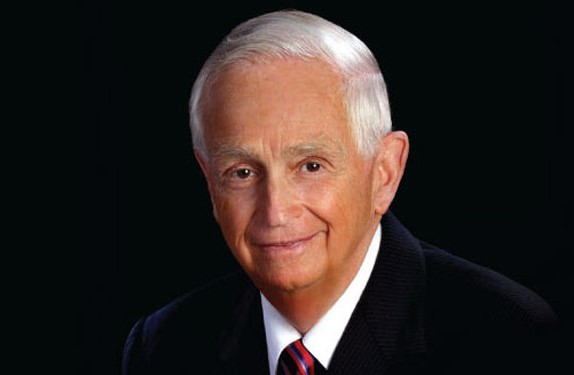
I agree with Marriott International when they say that Mr. Marriott’s “impact on the hospitality industry is only exceeded by his kindness”. On his birthday, I wanted to express my admiration and appreciation for the example Mr. Marriott gave me as a leader and how it has formed my management style.
While still in college, I joined Marriott in 1976 as a charter member of Marriott’s Great America in Santa Clara. On opening day, Mr. Marriott welcomed all of us. And just 5 years later, I was fortunate to serve as the opening director of services for Marriott’s 100th property, the Maui Marriott Resort, the first in the state of Hawaii. What I remember to this day was how Mr. Marriott would walk the backstage areas and greet everyone with a smile and a handshake. He didn’t wait for someone to approach him. He initiated the interaction. “Take good care of your employees and they’ll take good care of the customers.” And in the gesture of Mr. Marriott walking around to introduce himself to all of us, it was obvious the mantra wasn’t simply a slogan, but really something that drove the leadership philosophy of the company. While I left Marriott shortly thereafter I always remembered that example.
Thirty-five years after my first day at Great America, I was the charter general manager of The Henry – Autograph Collection which for 21 years stood as the Ritz-Carlton Dearborn. Mr. Marriott came through on a tour of the property. Since The Henry was a franchise, he did not have to do that during his two-day tour as there are many Marriott-managed properties in Detroit. But he did. Serving many years as a Board member of General Motors, he had visited often when it was a Ritz-Carlton. Many of the same associates were there to greet him on his first visit to The Henry. We had the line of associates upon his arrival and he took the time to shake everyone’s hand. But what I remember was that on our tour of the property, he made it a point to acknowledge every associate as he had done in Maui.
I can tell you that the genuine appreciation that Mr. Marriott shows on every visit to every associate just doesn’t happen in other hotel companies. The lesson here: It all starts at the top. A handshake and a smile from the Executive Chairman may seem to him like a very small thing, but it certainly made an impact on all of us. From day one, I understood you simply can’t lead from the corner office.
For many years, there has been a stranglehold of the “Profits over People” mentality in business. Senior executives care about top-line revenue, product and labor costs, market share, the stock price, bottom-line profits, and even their competitors, more than their people. Listening to the sweet cha-ching sound of profits, these bad bosses do not hear their grumbling employees and complaining customers many hierarchical rungs below. Even if bosses could hear, they would wear noise-canceling headphones, oblivious to the employees’ concerns and customer complaints. And “Profits over People” bad bosses would demand “My way or the highway” to the employees. Bad bosses didn’t care much about employees and employees could care less about their bosses or customers.
Today, instead of focusing on “Profits over People”, envision “People First” as the solid foundation for everlasting business success. One caveat is “Employees First”. Managers will always see people as “employees”. Despite preaching “Employees First”, senior leaders would always have the rank and file employees “first”, on the bottom of the ladder, well below the leaders.
Recognizing “People First”, leaders will CARE for their people.
COMMUNICATE openly, transparently, interactively, and frequently any information that their people need and want to know. Listen empathetically to the people’s suggestions, concerns, and complaints. Express compassion with their recommendations and encouragement.
APPRECIATE the important roles, responsibilities, and efforts of their people.
RECOGNIZE, honor, and offer accolades for individual and team achievements, accomplishments, and acts of service to colleagues or customers.
EMPOWER people to make the right decisions for themselves, their colleagues, customers, and their business.
Whether it’s the turmoil of the pandemic, Skimpflation, or The Great Resignation, businesses will invigorate the New Normal with the “People First” culture. No longer are people taking second or third seats to customers or profits.
This cultural transformation of “People First” and the leadership commitment to CARE will enthuse and energize people to be engaged with their colleagues, customers, and the business.
When we create a great experience for people as much as we do for customers, we will earn the loyalty of both. And soon, without our focus on profits, profits will follow. And everyone, our people and our customers, will be enriched, literally and figuratively.
Is customer service the frontline? Really? Are we called to duty on the frontline battling customers? Doctors and nurses don’t serve their ailing patients. They care. So shouldn’t customer service be customer care? Or even better …
We are the Customer CARE team.
We CARE for each member of our team:
COMMUNICATE openly, transparently, interactively, and frequently any information that our people need and want to know. Listen empathetically to the people’s suggestions, concerns, and complaints. Express compassion with our recommendations and encouragement.
APPRECIATE the important roles, responsibilities, and efforts of our people.
RECOGNIZE, honor, and offer accolades for individual and team achievements, accomplishments, and acts of service to colleagues or customers.
EMPOWER our people to make the right decisions for themselves, their colleagues, customers, and their business.
We CARE for each customer:
COMMUNICATE with every customer with a smile, eye contact, and polite interaction. Inform each customer transparently and interactively of the product’s or service’s function, liabilities, and advantages to them.
ACKNOWLEDGE each customer’s presence and value to us.
RESPOND promptly and empathetically to each customer’s questions, concerns, and complaints.
ENRICH the experiences and, ultimately, the lives of every customer.
And when we CARE, each customer is wowed and happy, intent on returning again and again, raving to others along the way.
Customer service is for a job. If all a person did was for a job, then it would be to satisfy a customer. Satisfied customers feel that customer service is good, but not more than was expected, just average. Nobody raves about average. And satisfied customers may leave when they find something better or less expensive. So don’t have a job that satisfies customers.
Instead, invest in Customer CARE to develop your people to wow your customers. And when your people are energized and engaged to enthuse your customers, everyone’s lives will be enriched.
"People need to be reminded more often than they need to be instructed."
Samuel Johnson
This blog, along with my Facebook, Instagram and Twitter pages, offer practical tips, insight and inspiration to serve as reminders on how to improve your personal delivery of customer service.




















 BILL QUISENG | Deliver the World's Best Customer Experience